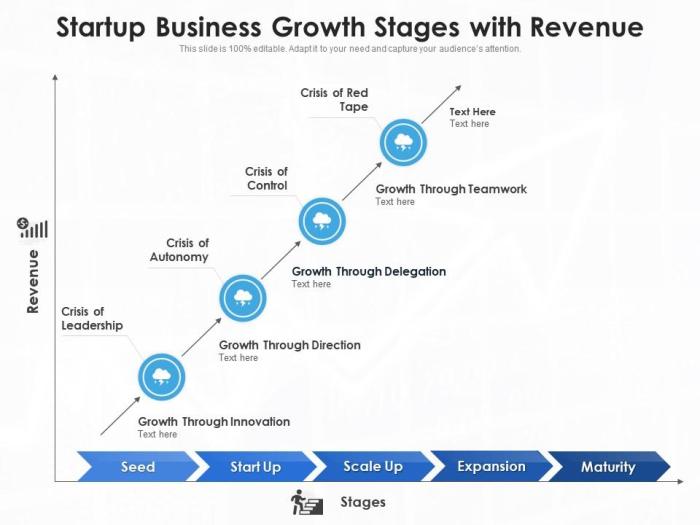
Fueling a startup’s success hinges on robust revenue growth. Understanding the intricacies of this process—from defining key metrics like Monthly Recurring Revenue (MRR) and Annual Recurring Revenue (ARR) to implementing effective strategies and analyzing performance data—is crucial for sustainable expansion. This exploration delves into the multifaceted nature of revenue growth in the dynamic startup landscape, examining internal and external factors that influence progress, along with practical strategies for acceleration and maintaining long-term viability.
We will examine various revenue models, marketing strategies, and pricing approaches, providing a comprehensive overview of the tools and techniques needed to navigate the challenges and opportunities inherent in achieving and sustaining revenue growth. Case studies will illustrate real-world applications of these principles, offering valuable insights for entrepreneurs and investors alike.
Defining Revenue Growth in Startups
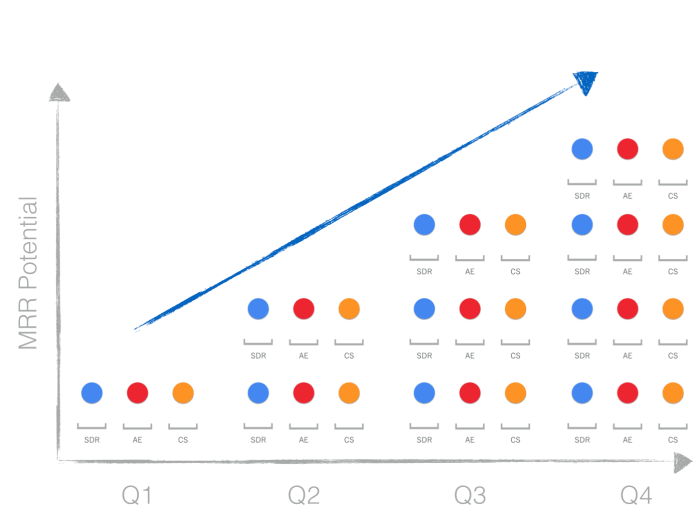
Revenue growth is the lifeblood of any startup. It signifies the company’s ability to generate increasing income, validating its business model and demonstrating its potential for long-term success. For startups, however, revenue growth takes on a unique significance, often directly correlating with securing further funding, attracting top talent, and achieving market dominance. Understanding and effectively managing revenue growth is paramount for survival and scaling.
Measuring revenue growth in startups requires a nuanced approach, focusing on key metrics that reflect the specific characteristics of the business model. Unlike established corporations, startups often prioritize sustainable, recurring revenue streams over short-term gains. This emphasis on recurring revenue allows for better predictability and planning for future growth.
Key Metrics for Measuring Revenue Growth
Several key metrics provide a comprehensive view of a startup’s revenue growth trajectory. These metrics go beyond simple top-line revenue figures to offer a more granular understanding of the underlying drivers of growth. Accurate tracking and analysis of these metrics are crucial for informed decision-making and strategic adjustments.
Among the most important are:
- Monthly Recurring Revenue (MRR): This metric represents the predictable revenue a startup generates each month from its subscription-based or recurring services. It’s a crucial indicator of the health and stability of the business, especially for SaaS (Software as a Service) companies.
- Annual Recurring Revenue (ARR): Similar to MRR, ARR represents the predictable revenue generated annually from recurring subscriptions or services. It provides a longer-term perspective on revenue predictability and growth potential.
- Customer Lifetime Value (CLTV): This metric measures the total revenue a startup expects to generate from a single customer over their entire relationship with the company. A high CLTV indicates a strong customer base and a sustainable revenue model. Calculating CLTV helps startups understand customer acquisition costs and optimize their marketing and sales strategies.
Revenue Growth Models
Startups can experience different patterns of revenue growth, each with its own characteristics and implications for the business strategy. Understanding these models helps in setting realistic expectations and adjusting strategies accordingly.
| Model Name | Description | Growth Rate Characteristics | Suitable Startup Types |
|---|---|---|---|
| Linear Growth | Consistent and steady increase in revenue over time. | Constant rate of growth; predictable and manageable. | Startups with established markets and predictable demand; businesses with a clear and repeatable sales process. |
| Exponential Growth | Rapid and accelerating increase in revenue. | Growth rate increases over time; high potential but also high risk. | Startups disrupting existing markets; companies with viral or network effects; businesses with rapid product adoption. |
| S-Curve Growth | Initially slow growth, followed by rapid acceleration, and then leveling off. | Sigmoidal pattern; reflects market saturation and limitations. | Startups entering new markets; companies with innovative products requiring significant market education; businesses facing competitive pressures. |
| Hockey Stick Growth | Initially slow growth followed by a period of extremely rapid growth. | Characterized by a sharp inflection point; often associated with significant market breakthroughs or successful pivots. | Startups achieving product-market fit; businesses experiencing a sudden surge in demand; companies leveraging successful marketing campaigns. |
Factors Influencing Revenue Growth
A startup’s revenue trajectory is a complex interplay of internal strategies and external market forces. Understanding these factors is crucial for building a sustainable and rapidly growing business. While some factors are within a startup’s control, others require adaptability and strategic planning to navigate effectively. This section delves into the key influences shaping revenue growth, offering insights and examples to illustrate their impact.
Internal Factors Influencing Revenue Growth
Internal factors are those directly controlled by the startup. These are often the most impactful, as they represent the company’s ability to execute its business model and adapt to changing conditions. Strong internal factors contribute significantly to a positive revenue growth trajectory.
- Product-Market Fit: A strong product-market fit is paramount. This refers to the degree to which a product satisfies market demand. Startups achieving a strong fit often see exponential revenue growth, as their product resonates with the target audience and addresses a real need.
- Pricing Strategy: Effective pricing is crucial. A well-defined pricing strategy considers factors like cost of goods sold, market competition, and customer perceived value. Finding the optimal price point maximizes revenue and profitability.
- Sales and Marketing Effectiveness: The ability to effectively reach and convert potential customers is vital. A well-executed sales and marketing strategy, leveraging appropriate channels and messaging, significantly impacts revenue growth. This includes effective lead generation, sales conversion, and customer retention.
- Operational Efficiency: Streamlined operations minimize costs and maximize productivity. Efficient processes in areas such as production, logistics, and customer service free up resources for growth initiatives and improve profitability.
- Team and Leadership: A strong team with skilled individuals in key roles is essential. Effective leadership fosters innovation, motivates the team, and ensures strategic alignment, all of which contribute to revenue growth.
External Factors Influencing Revenue Growth
External factors are largely outside a startup’s direct control, yet they significantly impact revenue growth. Understanding and adapting to these factors is crucial for long-term success.
- Market Trends: Changes in consumer preferences, technological advancements, and emerging market segments can drastically influence revenue growth. Startups must be agile and adapt to these shifts to remain competitive.
- Economic Conditions: Macroeconomic factors like inflation, interest rates, and recessionary periods directly impact consumer spending and business investment, thus affecting a startup’s revenue. Recessions, for example, often lead to decreased consumer spending, impacting revenue for many businesses.
- Competition: The competitive landscape plays a major role. The presence of strong competitors, new entrants, or disruptive technologies can impact market share and revenue growth. A competitive analysis is crucial for strategic planning.
- Regulatory Environment: Government regulations and policies can impact a startup’s operations and revenue. Changes in regulations can create opportunities or challenges, requiring proactive adaptation.
Examples of Startups with Rapid Revenue Growth
Several startups have demonstrated rapid revenue growth due to a combination of internal and external factors. For example, Spotify’s success can be attributed to its strong product-market fit (streaming music), effective marketing (leveraging social media and partnerships), and its ability to navigate the changing music industry landscape. Similarly, Airbnb capitalized on the growing popularity of the sharing economy and successfully executed a robust marketing and operational strategy.
These examples highlight the importance of aligning internal capabilities with external opportunities.
Comparing Marketing Strategies and Their Impact on Revenue Growth
Different marketing strategies yield varying results. While digital marketing (, social media, PPC) offers targeted reach and measurable results, traditional marketing (print, television) can build brand awareness and credibility. The optimal strategy depends on the target audience, product, and available resources. A blended approach, integrating digital and traditional tactics, often proves most effective. For instance, a startup focusing on a niche market might leverage targeted digital marketing campaigns, while a brand aiming for broader market penetration might use a combination of digital and traditional media.
The key is to measure the return on investment (ROI) of each strategy to optimize resource allocation.
Strategies for Accelerating Revenue Growth
Boosting revenue is paramount for startup survival and success. A well-defined strategy, incorporating various tactics and a keen understanding of your market, is crucial for achieving rapid and sustainable growth. This section explores actionable strategies, pricing considerations, and a structured approach to building a robust revenue generation plan.
Actionable Strategies for Revenue Growth
Implementing a diverse set of strategies is key to maximizing revenue potential. A single approach rarely suffices; a multi-pronged attack often yields the best results. The following strategies offer a range of options for startups to consider, depending on their specific circumstances and target market.
- Expand into New Markets: Explore geographically diverse markets or target new customer segments with tailored offerings. For example, a software startup initially focusing on small businesses could expand to serve larger enterprises with enterprise-level solutions.
- Develop Strategic Partnerships: Collaborating with complementary businesses can significantly expand your reach and access new customer bases. A fitness app could partner with a nutrition company to offer bundled services.
- Optimize Sales and Marketing Funnels: Analyzing your funnel to identify bottlenecks and areas for improvement is crucial. A/B testing different marketing messages and optimizing website conversion rates can significantly impact revenue.
- Improve Customer Retention: Focusing on retaining existing customers is often more cost-effective than acquiring new ones. Implementing loyalty programs and providing exceptional customer service can drastically improve retention rates.
- Introduce Upselling and Cross-selling: Offering additional products or services to existing customers can boost revenue significantly. A SaaS company could offer premium features or add-ons to its basic subscription.
- Leverage Content Marketing: Creating valuable and engaging content attracts potential customers and establishes your brand as a thought leader in your industry. This can lead to organic growth and improved brand recognition.
Pricing Strategies for Startups: Advantages and Disadvantages
Choosing the right pricing strategy is critical for startup success. Different strategies appeal to different market segments and business models. A careful analysis of your target market, competition, and cost structure is essential before selecting a pricing strategy.
- Premium Pricing: This strategy positions your product or service as high-value and exclusive. Advantages: High profit margins, strong brand perception. Disadvantages: Limited market reach, higher risk of price sensitivity.
- Value-Based Pricing: This focuses on the perceived value your product or service offers to the customer. Advantages: Justifies higher prices, strong customer loyalty. Disadvantages: Difficult to accurately assess perceived value, requires strong market research.
- Competitive Pricing: This involves setting prices similar to competitors. Advantages: Easier market entry, avoids price wars. Disadvantages: Lower profit margins, less differentiation.
- Cost-Plus Pricing: This involves adding a markup to your production costs. Advantages: Simple to calculate, guarantees profit margin. Disadvantages: Ignores market demand and competitor pricing.
- Freemium Pricing: This offers a basic version for free and charges for premium features. Advantages: Wide market reach, high user acquisition. Disadvantages: Lower average revenue per user (ARPU), challenges in converting free users to paying customers.
Developing a Robust Revenue Generation Plan
A well-structured revenue generation plan is essential for startup success. This plan should be dynamic and adaptable to changing market conditions.
- Define Your Target Market: Clearly identify your ideal customer profile, including demographics, needs, and purchasing behavior.
- Identify Your Value Proposition: Articulate the unique value your product or service offers to your target market.
- Choose Your Pricing Strategy: Select a pricing strategy that aligns with your value proposition and market conditions (as discussed above).
- Develop Your Sales and Marketing Strategy: Artikel the channels you’ll use to reach your target market and how you’ll convert leads into customers.
- Set Measurable Goals: Establish specific, measurable, achievable, relevant, and time-bound (SMART) goals for revenue growth.
- Track Your Progress: Regularly monitor key metrics, such as revenue, customer acquisition cost (CAC), and customer lifetime value (CLTV), to assess the effectiveness of your strategy and make necessary adjustments.
Calculating Customer Acquisition Cost (CAC) and its Impact on Revenue Growth
Understanding and managing your CAC is crucial for sustainable revenue growth. A high CAC can significantly hinder profitability, while a low CAC indicates efficient customer acquisition.
The formula for calculating CAC is:
CAC = Total Marketing and Sales Costs / Number of New Customers Acquired
For example, if a startup spent $10,000 on marketing and sales in a given month and acquired 100 new customers, its CAC would be $100 ($10,000 / 100).
A high CAC relative to customer lifetime value (CLTV) indicates an unsustainable business model. Startups should continuously strive to optimize their marketing and sales efforts to reduce CAC and improve profitability.
Analyzing Revenue Growth Data
Analyzing revenue growth data is crucial for understanding a startup’s performance and making informed decisions about future strategies. Effective analysis involves employing various methods to track trends, predict future performance, and identify key areas for improvement. This process goes beyond simply looking at the numbers; it’s about interpreting the data to gain actionable insights.
Trend Analysis
Trend analysis involves examining revenue data over time to identify patterns and predict future growth. This can be done using various techniques, including simple moving averages, exponential smoothing, and regression analysis. For instance, a simple moving average calculates the average revenue over a specific period (e.g., the last three months), smoothing out short-term fluctuations to reveal underlying trends. Exponential smoothing gives more weight to recent data, making it more responsive to recent changes.
Regression analysis allows for the identification of a relationship between revenue and other variables, such as marketing spend or customer acquisition cost, enabling more accurate predictions. A startup might use trend analysis to determine if its revenue is growing linearly, exponentially, or following a more complex pattern. This informs decisions regarding resource allocation and future growth targets.
Key Performance Indicators (KPIs)
Several key performance indicators (KPIs) are essential for assessing revenue growth. These metrics provide a quantifiable measure of progress towards revenue goals. Examples include monthly recurring revenue (MRR), customer lifetime value (CLTV), customer acquisition cost (CAC), and churn rate. Analyzing these KPIs in conjunction with overall revenue growth provides a comprehensive understanding of the drivers of growth and potential areas of weakness.
For example, a high CAC relative to CLTV might indicate a need to refine customer acquisition strategies. Similarly, a high churn rate suggests a need to improve customer retention efforts. Tracking these KPIs over time allows for the identification of trends and the assessment of the effectiveness of various growth initiatives.
Visualizing Revenue Growth Data
Visualizing data is crucial for effective communication and identifying trends that might be missed in raw data. Several charts and graphs can be used to represent revenue growth.A line chart, for example, is ideal for showing revenue trends over time. The x-axis would represent time (e.g., months or quarters), and the y-axis would represent revenue. Data points would represent revenue for each period, connected by a line to show the trend.
Clear labels on both axes and a title summarizing the chart’s content are essential. For instance, a line chart could clearly show a period of rapid growth followed by a period of stagnation, allowing for a quick identification of critical periods and potential causes for changes.A bar chart can effectively compare revenue across different product lines, regions, or sales channels.
The x-axis would represent the categories (e.g., product A, product B), and the y-axis would represent revenue. Each bar’s height would represent the revenue for that specific category. Again, clear labels and a title are necessary for easy interpretation. A bar chart could illustrate which product or region contributes most significantly to overall revenue.A pie chart could show the proportion of revenue contributed by different sources.
Each slice represents a revenue source (e.g., subscriptions, one-time purchases), with the size of the slice proportional to its contribution to total revenue. Labels indicating the percentage contribution of each source are crucial. A pie chart can provide a quick overview of revenue diversification.For instance, a startup might use a line chart to track monthly revenue growth over the past year, showing a clear upward trend.
They might then use a bar chart to compare revenue generated by different marketing campaigns, identifying the most effective strategies. Finally, a pie chart could illustrate the revenue breakdown across different customer segments.
Revenue Growth and Sustainability
Sustainable revenue growth is paramount for the long-term success of any startup. While rapid initial growth might attract investors and generate excitement, it’s the ability to maintain and scale this growth consistently that truly determines a startup’s viability and ultimate market dominance. Without a sustainable model, even the most promising ventures can falter and ultimately fail.The path to sustainable revenue growth is rarely straightforward.
Startups often face numerous challenges in maintaining consistent revenue streams. These challenges can stem from market fluctuations, increased competition, evolving customer needs, and difficulties in scaling operations effectively to meet growing demand while maintaining profitability. Overcoming these hurdles requires a strategic approach and a deep understanding of the market dynamics and the startup’s unique strengths and weaknesses.
Challenges in Maintaining Consistent Revenue Growth
Startups frequently encounter difficulties in sustaining their initial growth trajectory. These difficulties often manifest as inconsistent sales cycles, difficulties in acquiring new customers at scale, struggles with customer retention, and the inability to adapt quickly to changing market conditions. For instance, a startup heavily reliant on a single product or customer segment might find itself vulnerable to market shifts or changes in customer preferences, leading to a sudden drop in revenue.
Another common challenge is the inability to manage costs effectively as the company scales, potentially leading to reduced profitability despite increased revenue.
Best Practices for Building a Sustainable Revenue Model
Building a sustainable revenue model requires a multifaceted approach. Diversifying revenue streams, focusing on customer lifetime value (CLTV), and developing a strong understanding of unit economics are crucial. A diversified revenue model reduces reliance on any single source of income, mitigating the risk associated with market fluctuations or changes in customer behavior. Focusing on CLTV encourages strategies that build long-term customer relationships, leading to recurring revenue and reduced customer acquisition costs.
Careful analysis of unit economics – the costs and revenues associated with each unit sold – helps identify areas for improvement in profitability and efficiency.
Hypothetical Scenario: Rapid Growth, Sustainability Challenges
Imagine a social media startup, “ConnectNow,” that experiences explosive growth in its first year, driven by a viral marketing campaign. However, ConnectNow’s initial success relies heavily on paid advertising, leading to high customer acquisition costs. While revenue is high, the company is operating at a significant loss. Furthermore, ConnectNow lacks a robust strategy for customer retention, resulting in high churn rates.
The problem is a reliance on unsustainable growth tactics and a lack of focus on long-term profitability.Potential solutions include: diversifying revenue streams by introducing premium features or partnerships; optimizing marketing spend to reduce customer acquisition costs; implementing strategies to improve customer retention, such as personalized content and loyalty programs; and carefully analyzing unit economics to identify areas for cost reduction and increased profitability.
By addressing these issues, ConnectNow can transition from unsustainable rapid growth to a more stable and profitable trajectory.
Successfully navigating the path to sustainable revenue growth requires a holistic approach. By understanding key metrics, identifying influential factors, implementing effective strategies, and consistently analyzing data, startups can increase their chances of achieving long-term success. This journey necessitates a proactive, adaptable mindset, a willingness to iterate based on data-driven insights, and a commitment to building a robust and sustainable revenue model capable of weathering market fluctuations and fostering consistent growth.
The case studies presented highlight the diverse paths to success, emphasizing the importance of tailoring strategies to specific industry contexts and market dynamics.
Commonly Asked Questions
What are some common pitfalls startups face regarding revenue growth?
Common pitfalls include underestimating customer acquisition costs (CAC), neglecting market research, failing to adapt to market changes, and neglecting customer retention.
How important is customer retention in revenue growth?
Customer retention is paramount. Retaining existing customers is significantly cheaper than acquiring new ones, contributing substantially to long-term revenue stability and growth.
How can a startup measure the effectiveness of its marketing campaigns?
Track key metrics like website traffic, conversion rates, customer acquisition cost (CAC), and return on investment (ROI) for each campaign to assess effectiveness.
What role does pricing strategy play in revenue growth?
Pricing significantly impacts revenue. Finding the optimal balance between profitability and market competitiveness is crucial, considering factors like value proposition, competitor pricing, and customer willingness to pay.


