
Understanding revenue growth is paramount for any business, but the path to success varies significantly across industries. This analysis delves into the multifaceted factors driving revenue expansion, examining diverse sectors and their unique challenges. We’ll explore key drivers, economic influences, competitive landscapes, and future trends, offering a comprehensive perspective on maximizing revenue potential.
From the rapid advancements in technology to the evolving dynamics of healthcare and retail, we’ll dissect the strategies employed by successful companies and highlight crucial lessons learned from both triumphs and setbacks. This exploration aims to provide a practical framework for businesses seeking to navigate the complexities of revenue growth in today’s dynamic market.
Impact of Economic Factors on Revenue Growth
Revenue growth is significantly influenced by a complex interplay of economic factors, both at the macroeconomic and microeconomic levels. Understanding these influences is crucial for businesses to effectively plan for future growth and navigate periods of economic uncertainty. Fluctuations in macroeconomic conditions, government policies, and global economic events all contribute to the varying revenue trajectories observed across different industries.Macroeconomic Conditions and Their Influence on Revenue
Inflation’s Impact on Revenue Growth
Inflation, a sustained increase in the general price level of goods and services, significantly impacts revenue growth. High inflation erodes purchasing power, potentially leading to reduced consumer spending and lower demand for many goods and services. This effect is particularly pronounced in industries producing non-essential goods or services, where consumers are more likely to cut back on spending during inflationary periods.
Conversely, industries producing essential goods, such as food and energy, may see increased revenue due to higher prices, although this may be offset by decreased demand if inflation becomes too severe. For example, during periods of high inflation, the fast-food industry might experience increased revenue due to higher prices, but the volume of sales might decline as consumers seek cheaper alternatives.
Recession’s Impact on Revenue Growth
Recessions, periods of significant economic decline, typically lead to decreased revenue growth across most industries. Reduced consumer confidence and decreased disposable income result in lower overall spending. Industries highly sensitive to economic downturns, such as the automotive and housing sectors, experience particularly sharp declines in revenue during recessions. Businesses in these sectors often respond by reducing production, laying off employees, and implementing cost-cutting measures.
The 2008 financial crisis, for example, severely impacted the automotive industry globally, with many manufacturers experiencing significant revenue drops and even bankruptcy.
Government Policies and Regulations
Government policies and regulations play a significant role in shaping revenue growth across different industries. Tax policies, for instance, can impact profitability and investment decisions. Changes in corporate tax rates, for example, can directly affect a company’s after-tax profits and, consequently, its ability to reinvest in growth. Similarly, environmental regulations can increase costs for some industries, while subsidies and incentives can boost revenue in others.
For example, tax breaks for renewable energy companies can stimulate investment and revenue growth in the green energy sector, while stricter emission standards may increase costs and reduce profitability in industries with high carbon footprints.
Global Economic Events and Their Industry-Specific Impact
Global economic events, such as financial crises, trade wars, and pandemics, can have profound and often unpredictable impacts on revenue growth across various industry sectors. The COVID-19 pandemic, for example, led to significant revenue declines in travel, hospitality, and entertainment industries, while simultaneously boosting demand and revenue in sectors like e-commerce and technology. Similarly, trade wars can disrupt supply chains and increase costs, negatively impacting industries heavily reliant on international trade.
Correlation Between Key Economic Indicators and Revenue Growth
| Economic Indicator | Consumer Discretionary Goods Industry | Essential Goods Industry (e.g., Food) |
|---|---|---|
| Inflation Rate | Negative correlation (higher inflation, lower revenue growth, due to decreased consumer spending) | Positive correlation (higher inflation, higher revenue due to higher prices, but potentially offset by decreased volume) |
| GDP Growth Rate | Positive correlation (higher GDP growth, higher revenue growth) | Positive correlation (higher GDP growth, higher revenue growth, although less sensitive than discretionary goods) |
| Unemployment Rate | Negative correlation (higher unemployment, lower revenue growth due to reduced consumer spending) | Less pronounced correlation (higher unemployment may slightly reduce revenue due to lower consumer spending, but the impact is generally less significant than on discretionary goods) |
Competitive Landscape and Revenue Growth
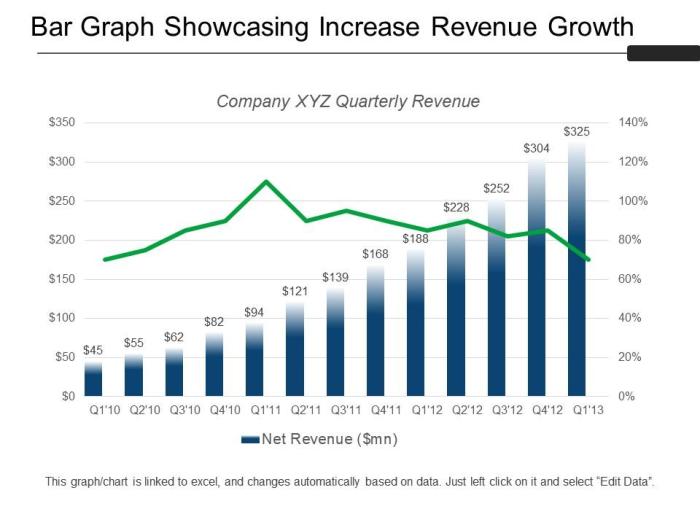
The competitive landscape significantly influences a company’s revenue growth trajectory. Industries with high barriers to entry often exhibit slower growth, while those with lower barriers and rapid innovation tend to see more dynamic revenue fluctuations. Understanding the competitive dynamics is crucial for developing effective growth strategies.
Analyzing the competitive landscapes of two contrasting industries—for example, the pharmaceutical industry and the fast-food industry—reveals stark differences. The pharmaceutical industry, characterized by high research and development costs, stringent regulatory hurdles, and patent protection, typically displays a more consolidated market with slower revenue growth but higher profit margins for established players. Conversely, the fast-food industry features lower barriers to entry, intense competition, and rapid innovation, resulting in faster revenue growth but often lower profit margins due to price sensitivity and competitive pressures.
These contrasting scenarios highlight the diverse impacts of competitive intensity on revenue growth.
Strategies for Revenue Growth in Highly Competitive Markets
Companies operating in highly competitive markets must adopt proactive strategies to achieve revenue growth. These strategies often focus on differentiation, innovation, and efficient operations. Maintaining a strong brand identity, consistently delivering high-quality products or services, and building strong customer relationships are fundamental. Further, companies often invest heavily in marketing and advertising to increase brand awareness and market share.
Effective cost management and operational efficiency are also crucial for maximizing profitability in competitive environments. For instance, a fast-food chain might focus on streamlining its operations to reduce costs and offer value meals to attract price-sensitive customers, while a pharmaceutical company might prioritize research and development to create innovative drugs with strong patent protection.
The Role of Mergers and Acquisitions in Driving Revenue Growth
Mergers and acquisitions (M&A) can be a powerful tool for achieving revenue growth, particularly in consolidating industries. Acquiring a competitor can eliminate competition, expand market share, and provide access to new technologies or markets. For example, the merger of two large pharmaceutical companies could lead to a significant increase in revenue by combining their product portfolios and distribution networks.
However, M&A activity carries inherent risks, including integration challenges, potential antitrust issues, and the high cost of acquisition. Successful M&A requires careful planning, due diligence, and effective integration of the acquired company into the acquiring firm.
Competitive Strategies Categorized by Industry Type
The most effective competitive strategies vary significantly across different industry types. A strategy that works well in one industry might be ineffective or even detrimental in another. Below are some examples categorized by industry type:
- Technology Industry: Focus on rapid innovation, first-mover advantage, strategic partnerships, and aggressive marketing to build brand recognition. Examples include Apple’s continuous product innovation and Google’s strategic acquisitions to expand its market dominance.
- Retail Industry: Emphasize customer experience, loyalty programs, omnichannel strategies (combining online and offline sales), and efficient supply chain management. Examples include Amazon’s focus on customer convenience and Walmart’s vast distribution network.
- Pharmaceutical Industry: Prioritize research and development, patent protection, strategic alliances, and effective regulatory navigation. Examples include Pfizer’s investment in R&D and its global distribution network.
- Fast-Food Industry: Focus on value pricing, menu innovation, convenient locations, efficient operations, and aggressive marketing campaigns targeting specific demographics. Examples include McDonald’s menu diversification and its extensive global presence.
Future Trends in Revenue Growth by Industry
Predicting future revenue growth across various industries requires considering a multitude of factors, including technological advancements, evolving consumer preferences, geopolitical shifts, and macroeconomic conditions. This section will explore some key trends, focusing on the renewable energy sector and the broader impact of technological innovation.
Renewable Energy Sector Revenue Growth
The renewable energy sector is poised for substantial revenue growth in the coming decades. Driven by increasing concerns about climate change and the decreasing costs of renewable energy technologies, governments and businesses are investing heavily in solar, wind, and other renewable sources. This investment translates into increased demand for renewable energy infrastructure, equipment, and services, leading to significant revenue expansion for companies operating in this sector.
For example, the growth of offshore wind farms, which are becoming increasingly cost-competitive with fossil fuel-based power generation, is projected to significantly boost revenue for companies specializing in their construction and maintenance. Furthermore, advancements in energy storage technologies, such as improved battery systems, are expected to further enhance the viability and profitability of renewable energy projects, creating new revenue streams for businesses involved in their development and deployment.
The integration of renewable energy sources into existing grids also presents opportunities for revenue generation through smart grid technologies and energy management services.
Technological Advancements and Revenue Growth Across Industries
Technological advancements are transforming various industries, significantly impacting their revenue streams. Artificial intelligence (AI) is revolutionizing sectors like healthcare, finance, and manufacturing, creating new efficiencies and generating substantial revenue growth through improved automation, personalized services, and data-driven insights. For example, AI-powered diagnostic tools in healthcare are expected to lead to improved accuracy and efficiency, boosting revenue for healthcare providers.
In the financial sector, AI-driven fraud detection systems are enhancing security and reducing losses, thereby contributing to increased profitability. Similarly, the adoption of 3D printing is transforming manufacturing, allowing for faster prototyping, customized products, and reduced material waste, which positively impacts revenue growth. The development and application of blockchain technology also present significant opportunities for revenue generation in areas such as supply chain management, digital identity verification, and secure transactions.
Challenges and Opportunities in Sustainable Revenue Growth
Achieving sustainable revenue growth across various sectors presents both challenges and opportunities. One significant challenge is the need for businesses to adapt to rapidly evolving market conditions and consumer preferences. This requires continuous innovation, investment in research and development, and a focus on delivering high-quality products and services. Furthermore, the increasing emphasis on environmental, social, and governance (ESG) factors is influencing investment decisions and consumer behavior.
Companies that prioritize sustainability and ethical practices are likely to attract more investment and build stronger customer relationships, leading to enhanced revenue growth. However, the transition to a more sustainable business model may require significant upfront investment and changes in operational processes. The opportunities lie in developing and adopting environmentally friendly technologies, improving resource efficiency, and creating innovative solutions that address global sustainability challenges.
Hypothetical Scenario: The Future of Electric Vehicle Charging Infrastructure
Imagine the year 2035. The widespread adoption of electric vehicles (EVs) has transformed the transportation landscape. A major player in the EV charging infrastructure market, “ChargeNet,” has capitalized on this trend. Through strategic partnerships with municipalities and private businesses, ChargeNet has established a vast network of high-powered, fast-charging stations strategically located across major highways and urban areas. Furthermore, ChargeNet has developed a sophisticated software platform that integrates with navigation systems and payment processors, providing users with a seamless and convenient charging experience.
This integrated approach, combined with the growing demand for EVs, has propelled ChargeNet’s revenue growth exponentially, making it a dominant force in the rapidly expanding EV charging market. The company’s revenue streams are diversified, including charging fees, subscription services, advertising revenue from the platform, and data analytics sales to transportation companies and city planners. This demonstrates the potential for substantial revenue growth in industries that successfully adapt to and leverage emerging technologies and market trends.
Measuring and Tracking Revenue Growth
Understanding and monitoring revenue growth is crucial for any business to assess its performance and make informed strategic decisions. Effective tracking requires a multifaceted approach, combining various measurement methods and key performance indicators (KPIs) to gain a comprehensive view of the business’s financial health. This allows for proactive adjustments to strategies and resource allocation to optimize revenue generation.Different methods exist for measuring and tracking revenue growth, each offering unique insights into the various aspects of a company’s financial performance.
Choosing the right method depends on the specific needs and goals of the business. Careful consideration of these methods is essential for accurate assessment and effective decision-making.
Revenue Growth Rate Calculation Methods
Several methods exist for calculating revenue growth rate. The most common involves comparing revenue figures from different periods. These calculations can be performed on a year-over-year (YOY) or quarter-over-quarter (QOQ) basis, providing insights into the trajectory of revenue growth over time. Understanding the nuances of these calculations is essential for accurate interpretation and strategic planning.
| Method | Formula | Description | Example |
|---|---|---|---|
| Year-over-Year (YOY) Growth Rate | [(Current Year Revenue - Previous Year Revenue) / Previous Year Revenue] - 100 |
Compares revenue from the current year to the previous year. | If revenue was $1 million last year and $1.2 million this year, the YOY growth rate is [(1.2 – 1) / 1] – 100 = 20% |
| Quarter-over-Quarter (QOQ) Growth Rate | [(Current Quarter Revenue - Previous Quarter Revenue) / Previous Quarter Revenue] - 100 |
Compares revenue from the current quarter to the previous quarter. | If revenue was $250,000 last quarter and $300,000 this quarter, the QOQ growth rate is [(300,000 – 250,000) / 250,000] – 100 = 20% |
| Compound Annual Growth Rate (CAGR) | [(Ending Value / Beginning Value)^(1 / Number of years)] - 1 |
Calculates the average annual growth rate over a specified period. Useful for longer-term analysis. | If revenue was $1 million five years ago and $1.61 million today, the CAGR is [(1.61 / 1)^(1/5)] – 1 ≈ 10% |
Key Performance Indicators (KPIs) for Monitoring Revenue Growth
Monitoring revenue growth effectively requires tracking several key performance indicators (KPIs). These metrics provide a more holistic understanding of revenue trends and the factors influencing them. Careful selection and consistent monitoring of these KPIs are vital for informed decision-making and strategic planning.The following are examples of KPIs used to monitor revenue growth:
- Average Revenue Per User (ARPU): Measures the average revenue generated per customer. A rising ARPU suggests increased customer value or successful upselling/cross-selling initiatives.
- Customer Acquisition Cost (CAC): Represents the cost of acquiring a new customer. A low CAC relative to ARPU indicates efficient customer acquisition strategies.
- Customer Churn Rate: Indicates the percentage of customers lost over a specific period. A low churn rate signifies customer retention success.
- Conversion Rate: Measures the percentage of website visitors or leads who complete a desired action (e.g., purchase). Improving conversion rates directly impacts revenue.
- Sales Cycle Length: The time it takes to close a sale. Reducing the sales cycle length can significantly boost revenue.
Data Analysis in Understanding Revenue Growth Trends
Data analysis plays a critical role in understanding the underlying factors driving revenue growth trends. By analyzing historical revenue data alongside other relevant KPIs, businesses can identify patterns, pinpoint areas for improvement, and forecast future revenue. This data-driven approach enables proactive decision-making and strategic planning.For example, analyzing sales data segmented by product, region, or customer segment can reveal which areas are performing well and which require attention.
Correlating revenue trends with marketing campaigns can assess the effectiveness of different strategies. Identifying seasonal trends can inform inventory management and staffing decisions. Sophisticated data analysis techniques, such as regression analysis and forecasting models, can provide valuable insights into future revenue projections. This allows for proactive adjustments to strategies and resource allocation.
Case Studies
Examining specific companies and their revenue trajectories provides valuable insights into the factors driving growth or decline. Analyzing both successful and unsuccessful cases allows for a more comprehensive understanding of revenue growth strategies and their effectiveness. The following case studies illustrate contrasting approaches and their respective outcomes.
Netflix: A Case Study in Revenue Growth
Netflix, initially a DVD-by-mail service, transitioned to a streaming platform and experienced phenomenal revenue growth. Their strategic shift leveraged technological advancements and changing consumer preferences. Key strategies included investing heavily in original content, expanding globally, and implementing a tiered subscription model offering varying levels of service. This diversified revenue streams and catered to a wider audience. The result was a significant increase in subscribers and a substantial rise in revenue, transforming Netflix into a dominant player in the entertainment industry.
Their consistent focus on user experience and technological innovation further fueled their success. For example, the introduction of personalized recommendations and offline viewing significantly enhanced user satisfaction and retention.
Blockbuster: A Case Study in Revenue Decline
In contrast to Netflix’s success, Blockbuster’s failure to adapt to changing market dynamics led to a dramatic decline in revenue and ultimately, bankruptcy. Their reluctance to embrace streaming technology, coupled with a slow response to Netflix’s growing popularity, proved fatal. While Blockbuster initially experimented with online services, their efforts lacked the scale and investment needed to compete effectively.
Furthermore, their business model, heavily reliant on physical stores and late fees, became increasingly obsolete in the face of convenient and on-demand streaming services. The lack of innovation and strategic foresight ultimately resulted in a significant loss of market share and a steep decline in revenue.
Comparison of Case Studies
Netflix’s success stands in stark contrast to Blockbuster’s failure. Netflix proactively adapted to technological advancements and evolving consumer behavior, investing heavily in innovation and content creation. Blockbuster, on the other hand, failed to anticipate these changes and adapt its business model accordingly. The key difference lies in their strategic agility and willingness to embrace new technologies. Netflix’s proactive approach and commitment to innovation allowed them to capitalize on emerging trends, while Blockbuster’s reactive and ultimately insufficient response led to its demise.
Key Takeaways
The following points summarize the key lessons learned from these case studies:
- Strategic Agility: The ability to adapt to changing market conditions and technological advancements is crucial for sustained revenue growth.
- Innovation: Continuous innovation and investment in new technologies and services are essential for maintaining a competitive edge.
- Customer Focus: Understanding and responding to evolving customer preferences and needs is vital for driving growth.
- Proactive Approach: A proactive approach to market changes and technological disruptions is more effective than a reactive one.
- Diversification: Diversifying revenue streams can mitigate risk and enhance resilience in the face of market fluctuations.
Ultimately, achieving sustainable revenue growth requires a nuanced understanding of industry-specific dynamics, economic factors, and competitive landscapes. By leveraging data-driven insights, implementing effective strategies, and adapting to evolving market trends, businesses can position themselves for long-term success. This analysis serves as a roadmap for navigating the complexities of revenue growth, empowering organizations to make informed decisions and achieve their financial objectives.
FAQ Explained
What are some common metrics used to measure revenue growth beyond annual growth rate?
Common metrics include year-over-year growth, month-over-month growth, customer lifetime value (CLTV), and revenue per customer.
How does seasonality impact revenue growth analysis?
Seasonality introduces fluctuations; accurate analysis requires accounting for these predictable variations to isolate underlying trends.
What role does pricing optimization play in revenue growth?
Strategic pricing, considering factors like competitor pricing and customer value, is crucial for maximizing revenue and profitability.
How can a company effectively measure the ROI of its revenue growth initiatives?
Tracking key performance indicators (KPIs) linked directly to revenue growth initiatives allows for accurate ROI calculation and evaluation of effectiveness.


