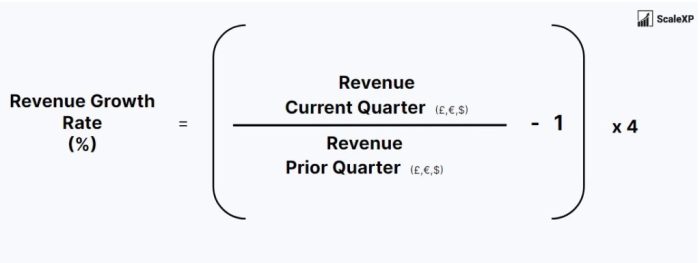
Unlocking sustainable business growth hinges on understanding and effectively managing revenue. This guide delves into the core components of revenue growth, providing a practical framework for calculating growth rates, identifying key influencing factors, and implementing effective strategies. We’ll explore both organic and inorganic approaches, examining real-world examples and offering actionable insights to help you achieve your revenue goals.
From analyzing historical data to forecasting future trends, we’ll equip you with the tools and knowledge necessary to navigate the complexities of revenue growth. We’ll also examine the crucial interplay between revenue growth and other key business metrics, emphasizing the importance of setting realistic targets and building a sustainable long-term strategy.
Defining Revenue Growth
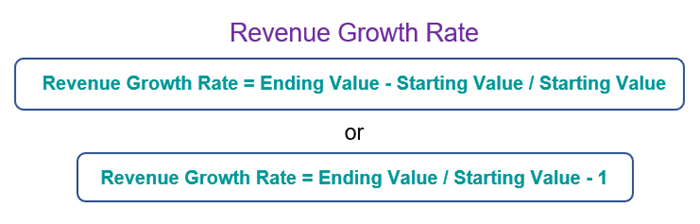
Revenue growth represents the increase in a company’s revenue over a specific period. Understanding its components is crucial for assessing a business’s financial health and future prospects. This involves analyzing not only the top-line number but also the underlying drivers of that growth.Revenue growth is fundamentally driven by two key components: increased sales volume and higher average revenue per unit (ARPU).
Increased sales volume refers to selling more products or services, while higher ARPU indicates selling existing products or services at a higher price point or through a more profitable sales channel. For example, a subscription service might increase revenue by acquiring more subscribers (volume) or by introducing a premium tier with a higher subscription fee (ARPU).
Examples of High and Low Revenue Growth Rates
High revenue growth is often associated with companies in rapidly expanding markets or those experiencing disruptive innovation. Examples include companies like Tesla, which has experienced significant growth in electric vehicle sales, and Netflix, which has consistently expanded its subscriber base. Conversely, companies in mature industries or those facing increased competition may exhibit lower revenue growth. Traditional brick-and-mortar retailers struggling to compete with e-commerce giants often fall into this category.
A specific example might be a local bookstore facing declining sales due to online competition. The difference in growth rates reflects varying market dynamics and competitive landscapes.
Organic versus Inorganic Revenue Growth
Organic revenue growth stems from internal efforts such as improved marketing, product development, and increased sales efficiency. It represents sustainable, long-term growth. In contrast, inorganic revenue growth relies on external factors like mergers, acquisitions, or strategic partnerships. While inorganic growth can lead to rapid expansion, it’s often less sustainable and depends heavily on the success of the acquired company or partnership.
For example, a software company achieving organic growth might focus on improving its user interface and expanding its marketing efforts. Conversely, an inorganic approach might involve acquiring a competitor to gain immediate market share.
Comparison of Revenue Growth Strategies
The following table compares various revenue growth strategies, highlighting their strengths and weaknesses:
| Strategy | Description | Strengths | Weaknesses |
|---|---|---|---|
| New Product Development | Creating and launching new products or services to attract new customers and expand market share. | Increased market reach, potential for higher margins. | High R&D costs, risk of market failure. |
| Market Penetration | Increasing sales of existing products to current customers. | Lower risk, cost-effective. | Limited growth potential if market is saturated. |
| Market Expansion | Expanding into new geographic markets or customer segments. | Significant growth potential, diversification. | Higher costs, increased complexity. |
| Strategic Partnerships | Collaborating with other businesses to leverage their resources and reach. | Access to new markets and technologies, reduced costs. | Potential conflicts of interest, dependence on partners. |
Calculating Revenue Growth
Understanding how to calculate revenue growth is crucial for businesses of all sizes. It provides a clear picture of the company’s financial health and performance, informing strategic decision-making and future planning. This section will Artikel the formula, demonstrate its application, and emphasize the significance of data accuracy.
The fundamental formula for calculating revenue growth rate is straightforward and relies on comparing revenue figures from two distinct periods. This allows businesses to track their progress and identify areas for improvement or potential concerns.
Revenue Growth Rate Formula
Revenue Growth Rate = [(Current Period Revenue – Prior Period Revenue) / Prior Period Revenue] x 100
This formula yields the percentage change in revenue between two periods. The “Current Period Revenue” represents the revenue generated during the most recent period (e.g., this year, this quarter), while “Prior Period Revenue” refers to the revenue from the previous corresponding period.
Applying the Formula: Different Scenarios
Let’s illustrate the application of the formula with a few examples.
Scenario 1: Year-over-Year Growth
A company’s revenue in 2022 was $1 million, and in 2023 it increased to $1.2 million. Applying the formula:
Revenue Growth Rate = [($1.2 million – $1 million) / $1 million] x 100 = 20%
This indicates a 20% year-over-year revenue growth.
Scenario 2: Quarterly Growth
A company’s revenue in Q1 2023 was $250,000, and in Q2 2023 it was $300,
000. The calculation is:
Revenue Growth Rate = [($300,000 – $250,000) / $250,000] x 100 = 20%
This shows a 20% revenue growth from Q1 to Q2.
Scenario 3: Negative Growth
If a company’s revenue in 2022 was $1 million and decreased to $800,000 in 2023, the calculation would be:
Revenue Growth Rate = [($800,000 – $1 million) / $1 million] x 100 = -20%
This represents a 20% decrease in revenue, or a negative 20% growth rate.
The Importance of Accurate Data
The accuracy of revenue growth calculations hinges entirely on the reliability of the underlying revenue data. Inaccurate or incomplete data will lead to flawed calculations, potentially misrepresenting the company’s actual performance and hindering effective strategic planning. Data should be meticulously collected, verified, and audited to ensure its integrity. Errors in data entry, accounting discrepancies, or inconsistencies in reporting methods can significantly skew the results.
Regular data checks and reconciliation are essential for maintaining data accuracy.
Step-by-Step Guide for Calculating Year-Over-Year Revenue Growth
- Identify the revenue figures: Determine the revenue generated during the current year and the revenue from the previous year.
- Subtract the prior year’s revenue from the current year’s revenue: This provides the absolute change in revenue.
- Divide the result by the prior year’s revenue: This normalizes the change relative to the previous year’s performance.
- Multiply the result by 100: This converts the result into a percentage, making it easily interpretable.
- Interpret the result: A positive percentage indicates revenue growth, while a negative percentage indicates a decline in revenue.
Revenue Growth and Business Metrics
Revenue growth, while a crucial indicator of a company’s success, doesn’t exist in a vacuum. Understanding its relationship with other key business metrics provides a more holistic view of financial health and operational efficiency. Analyzing these interdependencies allows businesses to make informed strategic decisions and optimize their growth strategies.Understanding the interplay between revenue growth and other key metrics is critical for sustainable business success.
Simply focusing on top-line growth without considering profitability or efficiency can lead to unsustainable practices. A balanced approach considers multiple perspectives to ensure long-term viability.
Revenue Growth and Profit Margin
Profit margin, calculated as net profit divided by revenue, reveals how much profit a company makes for every dollar of revenue generated. High revenue growth without a corresponding increase in profit margin might indicate inefficiencies or unsustainable pricing strategies. For example, a company aggressively discounting products to boost sales might experience rapid revenue growth, but a shrinking profit margin could negate the positive impact on overall profitability.
Conversely, consistent profit margin alongside revenue growth signals healthy business operations and efficient cost management. A company that effectively manages costs while expanding its revenue stream is demonstrating sustainable and profitable growth.
Revenue Growth and Customer Acquisition Cost (CAC)
Customer acquisition cost (CAC) represents the total cost of acquiring a new customer. Rapid revenue growth accompanied by a high and escalating CAC can be a warning sign. While acquiring new customers is essential for growth, a disproportionately high CAC compared to the customer lifetime value (CLTV) indicates unsustainable growth. A company needs to carefully balance its customer acquisition strategies to ensure that the cost of acquiring new customers doesn’t outweigh the revenue generated from those customers.
For instance, a company relying heavily on expensive advertising campaigns might experience rapid revenue growth initially, but if the CAC exceeds the CLTV, the business model is ultimately unsustainable.
Measuring the Success of Revenue Growth Initiatives
Several methods exist for evaluating the effectiveness of revenue growth strategies. These methods often involve comparing key metrics before and after the implementation of new initiatives.
Key Performance Indicators (KPIs) Related to Revenue Growth
A comprehensive understanding of revenue growth requires tracking various KPIs. These metrics offer a multifaceted perspective on the effectiveness of growth strategies.
- Monthly Recurring Revenue (MRR): Indicates the predictable revenue generated from subscriptions or recurring services.
- Annual Recurring Revenue (ARR): The annualized value of MRR, providing a yearly revenue projection.
- Customer Lifetime Value (CLTV): Predicts the total revenue generated by a single customer over their relationship with the company.
- Customer Churn Rate: Measures the percentage of customers who discontinue their service within a specific period.
- Average Revenue Per User (ARPU): Represents the average revenue generated per user or subscriber.
- Conversion Rate: The percentage of website visitors or leads who complete a desired action (e.g., purchase, sign-up).
Setting Realistic Revenue Growth Targets
Setting achievable revenue growth targets is crucial for maintaining motivation and ensuring that the growth strategy aligns with the company’s resources and capabilities. Unrealistic targets can lead to frustration, poor decision-making, and ultimately, failure. Realistic targets are based on thorough market research, analysis of past performance, and consideration of internal factors such as resources and capacity. For example, a startup aiming for a 1000% revenue increase in its first year might be setting an unrealistic target, while a 20% increase might be more achievable and sustainable, given their limited resources and market presence.
A well-established company with a strong market position might set a more ambitious target, reflecting their greater capacity and established customer base. The key is to strike a balance between ambition and feasibility.
Revenue Growth
Sustainable long-term revenue growth is the holy grail for any business. It’s not just about hitting ambitious targets this year; it’s about building a robust, adaptable engine that consistently drives profitability and market leadership. This requires a strategic approach that considers both internal capabilities and external market forces.
Strategies for Achieving Sustainable Long-Term Revenue Growth
Achieving sustainable revenue growth demands a multifaceted approach that goes beyond short-term gains. It involves cultivating a strong brand, fostering innovation, and strategically managing resources. A key element is understanding your customer base and consistently exceeding their expectations. Furthermore, investing in employee development and building a strong company culture are vital components of a sustainable growth strategy.
Potential Risks and Challenges to Long-Term Revenue Growth
Several factors can impede long-term revenue growth. Economic downturns, shifts in consumer preferences, increased competition, and technological disruptions are just a few examples. Internal challenges, such as ineffective marketing strategies, poor product development, or inadequate management, can also significantly impact a company’s ability to maintain sustainable growth. Failing to adapt to changing market dynamics or neglecting innovation can lead to stagnation and ultimately, decline.
For example, the rise of e-commerce significantly impacted brick-and-mortar retailers who failed to adapt their business models.
Adapting Revenue Growth Strategies to Changing Market Conditions
Market conditions are rarely static. Successful businesses demonstrate agility and responsiveness to change. This involves continuously monitoring market trends, analyzing competitor actions, and proactively adjusting strategies accordingly. For example, a company heavily reliant on a single product might diversify its offerings to mitigate risks associated with changing consumer demand. Similarly, a company operating primarily in a physical market might expand its online presence to capitalize on the growing e-commerce sector.
Data analytics plays a crucial role in this process, allowing businesses to identify emerging trends and make informed decisions.
Best Practices for Maintaining Sustainable Revenue Growth
A proactive approach is essential for maintaining sustainable revenue growth. The following best practices can help companies build a resilient and adaptable business model.
- Invest in Research and Development: Continuous innovation is crucial for staying ahead of the competition and meeting evolving customer needs. This includes developing new products and services, improving existing offerings, and exploring new technologies.
- Cultivate Strong Customer Relationships: Building strong customer relationships fosters loyalty and repeat business. This involves providing excellent customer service, actively seeking feedback, and personalizing the customer experience.
- Diversify Revenue Streams: Relying on a single revenue stream is inherently risky. Diversification across products, services, and markets reduces vulnerability to economic downturns and shifts in consumer demand.
- Embrace Data-Driven Decision Making: Utilizing data analytics allows businesses to gain valuable insights into customer behavior, market trends, and operational efficiency. This information can inform strategic decisions and optimize resource allocation.
- Develop a Strong Brand: A strong brand builds trust and loyalty, differentiating a company from its competitors. Effective branding involves consistent messaging, high-quality products or services, and a positive customer experience.
- Foster a Culture of Innovation: Encourage experimentation, risk-taking, and continuous improvement within the organization. This involves empowering employees, providing resources for innovation, and celebrating successes.
Mastering the revenue growth formula is not merely about calculating numbers; it’s about understanding the underlying dynamics of your business and market. By combining a robust understanding of the formula with strategic planning, insightful analysis, and a commitment to adaptation, businesses can unlock their full revenue potential and achieve lasting success. This guide provides a solid foundation for that journey, empowering you to make informed decisions and drive significant growth.
Question & Answer Hub
What is the difference between top-line and bottom-line growth?
Top-line growth refers to an increase in revenue, while bottom-line growth signifies an increase in profit. They are related but distinct; you can have top-line growth without bottom-line growth if costs increase disproportionately.
How can I predict future revenue growth?
Predicting future revenue growth involves analyzing historical data, market trends, and planned initiatives. Forecasting models, such as time series analysis, can be employed, but accuracy depends heavily on the reliability of input data and the stability of the market environment.
What are some common pitfalls to avoid when pursuing revenue growth?
Common pitfalls include neglecting customer retention, focusing solely on short-term gains at the expense of long-term sustainability, failing to adapt to changing market conditions, and misallocating resources.


