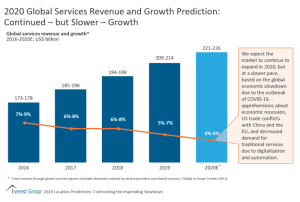
Understanding the factors driving exceptional revenue growth is crucial for investors, entrepreneurs, and business strategists alike. This exploration delves into the methodologies used to identify high-growth companies, analyzing key financial indicators and industry trends that contribute to their success. We’ll examine various growth strategies, including organic expansion and mergers and acquisitions, and explore the challenges and risks associated with rapid expansion.
From analyzing financial statements to understanding the impact of macroeconomic factors, this analysis provides a comprehensive overview of the dynamics shaping the landscape of top revenue growth companies. We’ll uncover the innovative business models and effective marketing strategies that propel these companies to the forefront, offering valuable insights for those seeking to achieve similar success.
Future Trends in Revenue Growth
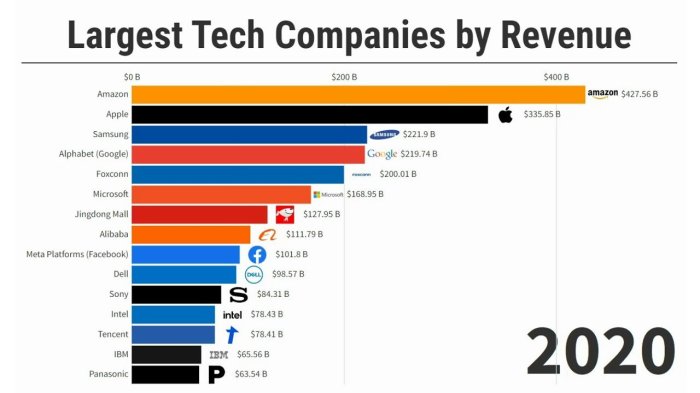
Predicting the future of revenue growth requires understanding the interplay of emerging technologies, evolving consumer behaviors, and shifting global economic landscapes. Several key trends are poised to significantly impact how businesses generate and expand their revenue streams in the coming years. These trends aren’t isolated events; they’re interconnected and will likely accelerate one another, creating a dynamic and rapidly changing business environment.The convergence of several technological advancements will be a primary driver of future revenue growth.
Artificial intelligence (AI), machine learning (ML), and the Internet of Things (IoT) are no longer futuristic concepts; they’re actively reshaping industries and creating new opportunities for revenue generation. The ability to analyze vast datasets, predict consumer behavior with greater accuracy, and automate processes will allow companies to optimize their operations, personalize customer experiences, and ultimately, increase revenue.
Artificial Intelligence and Machine Learning’s Impact on Revenue
AI and ML are revolutionizing numerous aspects of business, from marketing and sales to customer service and product development. For instance, AI-powered recommendation engines on e-commerce platforms personalize shopping experiences, leading to increased sales conversions. Predictive analytics, driven by ML algorithms, helps businesses forecast demand more accurately, optimizing inventory management and reducing waste. Furthermore, AI-powered chatbots provide 24/7 customer support, improving customer satisfaction and reducing operational costs.
Companies like Netflix and Amazon heavily leverage AI and ML for personalized recommendations and targeted advertising, resulting in substantial revenue growth. The successful integration of these technologies directly translates into higher efficiency, improved customer engagement, and ultimately, increased profitability.
The Rise of the Subscription Economy
The subscription model is rapidly gaining traction across various industries. Instead of one-time purchases, businesses offer ongoing access to products or services for a recurring fee. This creates predictable and recurring revenue streams, providing greater financial stability and enabling businesses to invest in growth initiatives. Examples include software-as-a-service (SaaS) companies, streaming services like Spotify and Netflix, and even subscription boxes catering to specific niches.
The predictability of subscription revenue allows for more accurate financial forecasting and facilitates strategic planning for long-term growth.
The Metaverse and Web3’s Revenue Potential
The burgeoning metaverse and the broader Web3 ecosystem present significant opportunities for revenue generation. While still in its early stages, the metaverse offers immersive experiences and new avenues for interaction between businesses and consumers. Companies are exploring virtual events, digital product sales, and virtual real estate as potential revenue streams. Non-fungible tokens (NFTs) and blockchain technology are also transforming digital ownership and creating new markets for digital assets.
While the full impact is yet to be realized, the metaverse and Web3 hold the potential to unlock substantial revenue growth for businesses that embrace these emerging technologies. Companies like Nike and Adidas are already experimenting with virtual apparel and accessories, demonstrating the early adoption of this trend.
Disruptive Technologies and Revenue Growth Strategies
Disruptive technologies, by their very nature, challenge established business models and create opportunities for new entrants. Companies that successfully adapt to these changes and integrate disruptive technologies into their strategies are likely to experience significant revenue growth. However, failing to adapt can lead to obsolescence. For example, the rise of e-commerce disrupted traditional brick-and-mortar retail, forcing many companies to adapt or face decline.
Companies that successfully integrated online sales channels and personalized digital marketing experienced considerable revenue growth. The key to navigating disruptive technologies is proactive adaptation, continuous innovation, and a willingness to embrace change.
REVENUE GROWTH
Sustained revenue growth is the lifeblood of any successful business. It signifies not just an increase in sales but a demonstrably healthy and expanding market presence, capable of weathering economic fluctuations and outpacing competitors. Understanding the drivers and mechanisms behind this growth is crucial for long-term viability and profitability.
Sustainable Revenue Growth and its Importance
Sustainable revenue growth is about consistent, predictable increases in revenue over time, achieved through a combination of strategic planning, efficient operations, and a strong market position. It’s not about short-term gains achieved through unsustainable practices like heavy discounting or one-off deals. Instead, it focuses on building a robust business model that generates consistent demand and profits. This type of growth allows for reinvestment in the business, expansion into new markets, and improved profitability, ultimately leading to greater long-term value for stakeholders.
Companies that prioritize sustainable growth are better equipped to handle economic downturns, invest in research and development, and attract and retain top talent. Conversely, businesses reliant on unsustainable growth strategies often face instability and a higher risk of failure. For example, a company experiencing rapid growth solely due to aggressive marketing and heavy discounting might find itself in a precarious position once these tactics are no longer effective.
Organic versus Inorganic Revenue Growth
Organic revenue growth refers to increases in revenue generated through the company’s core business operations, without external acquisitions or mergers. This is typically achieved through increased sales volume, higher prices, or a combination of both. Examples include expanding into new markets, launching new products or services, improving customer retention, and enhancing marketing and sales efforts. In contrast, inorganic revenue growth is achieved through external means, primarily through mergers, acquisitions, or strategic partnerships.
Acquiring a competitor, for instance, can instantly increase market share and revenue. The key difference lies in the source of the growth: internal operations versus external transactions. Consider a software company that organically grows by improving its product and expanding its user base versus a company that achieves inorganic growth by acquiring a smaller competitor with an established customer base.
Both methods contribute to overall revenue growth, but they differ significantly in their strategy and implementation.
Projecting Future Revenue Growth
Accurate revenue forecasting is essential for effective strategic planning and resource allocation. Several methods can be employed to project future revenue growth, each with its own strengths and limitations.One common method is the simple percentage growth rate, which assumes a consistent growth rate based on historical data. For example, if a company’s revenue grew by 10% annually for the past three years, this method would project a 10% growth rate for the coming years.
This is a straightforward approach, but it may not be accurate if the growth rate is expected to change.Another method is the market-size approach, which estimates future revenue based on market size and the company’s projected market share. This requires forecasting the overall market growth and the company’s ability to capture a share of that growth. For example, if the market is projected to grow by 5% annually and the company expects to maintain a 20% market share, its revenue would be projected to grow by 1% annually (5%20%).
This approach requires market research and analysis.More sophisticated methods, such as regression analysis, can incorporate multiple factors to create more accurate forecasts. This statistical technique identifies the relationship between revenue and other variables, such as marketing spend, economic conditions, and competitor activity, to predict future revenue. This requires substantial historical data and statistical expertise.
The choice of forecasting method depends on the available data, the complexity of the business, and the desired level of accuracy. A combination of methods is often used to create a robust and reliable forecast.
Ultimately, sustained revenue growth hinges on a combination of strategic planning, operational efficiency, and adaptability to market changes. By understanding the drivers of success, analyzing financial data effectively, and proactively managing risks, companies can position themselves for continued prosperity. The case studies presented highlight the diverse paths to achieving exceptional growth, demonstrating that while there’s no single formula, a well-defined strategy and a keen understanding of the market are essential ingredients for long-term success.
Detailed FAQs
What is the difference between organic and inorganic revenue growth?
Organic growth stems from internal expansion, such as increased sales or new product launches. Inorganic growth involves external factors, like mergers, acquisitions, or strategic partnerships.
How can I identify potentially high-growth companies early on?
Look for companies in emerging markets, with innovative products/services, strong management teams, and positive cash flow. Analyzing their financial statements for key ratios like revenue growth rate and gross profit margin is also crucial.
What are some common pitfalls for high-growth companies?
Rapid scaling can strain resources, leading to cash flow issues and operational inefficiencies. Maintaining a strong company culture amidst rapid growth is also challenging.