Understanding global revenue growth is crucial for navigating the complexities of the modern economy. This analysis delves into the multifaceted factors driving revenue expansion across various sectors, geographic regions, and technological landscapes. We’ll explore historical trends, examine current market dynamics, and offer insights into future growth projections, considering both the opportunities and challenges that lie ahead.
From macroeconomic indicators to the disruptive influence of technology, we will unpack the key drivers of revenue growth, offering a detailed sectoral analysis and geographic breakdown. We’ll also explore successful revenue growth strategies, potential risks, and the increasing importance of sustainability in driving long-term economic prosperity.
Forecasting Future Revenue Growth Trends
Having analyzed past and present global revenue growth trends, we can now project future performance. This forecast considers various macroeconomic factors, industry-specific dynamics, and technological advancements to provide a comprehensive outlook for the next five years. The projections are not absolute predictions but rather informed estimations based on available data and expert analysis.Forecasting MethodologyThe forecast utilizes a hybrid approach combining quantitative and qualitative methods.
Quantitative analysis involves econometric modeling, leveraging historical revenue data and relevant economic indicators like GDP growth, inflation rates, and consumer spending. This allows for the identification of trends and patterns to project future revenue. Qualitative analysis complements this by incorporating expert opinions from industry analysts and leaders, incorporating insights into emerging technologies, regulatory changes, and geopolitical events that might impact revenue growth.
The combination of these approaches aims to mitigate the limitations of each individual method and provide a more robust forecast.
Projected Revenue Growth Across Sectors
The following bar chart illustrates the projected annual average revenue growth rate for various key sectors over the next five years. Imagine a bar chart with the horizontal axis representing different sectors (e.g., Technology, Healthcare, Energy, Consumer Goods, Financial Services) and the vertical axis showing the projected annual average revenue growth rate (in percentage). The Technology sector shows the tallest bar, indicating a projected annual average growth rate of approximately 8%.
The Healthcare sector shows a slightly shorter bar, projecting around 6% annual average growth. The Energy sector’s bar is moderately tall, showing a projected 5% annual average growth. The Consumer Goods sector displays a bar of average height, representing a projected 4% annual average growth. Finally, the Financial Services sector shows a relatively shorter bar, indicating a projected 3% annual average growth.
These projections are based on the aforementioned hybrid methodology and consider factors specific to each sector. For example, the higher projected growth in the technology sector reflects ongoing digital transformation and increased investment in technological innovation. Conversely, the relatively lower growth in the financial services sector accounts for potential regulatory changes and economic uncertainties. This visual representation offers a clear comparison of projected growth across different sectors, highlighting the relative performance expectations.
Revenue Growth and Sustainability
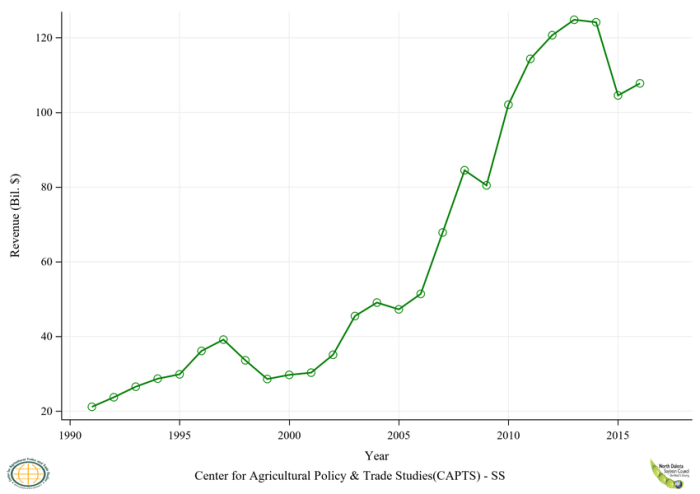
Sustainable business practices are no longer a niche pursuit; they are increasingly integral to long-term revenue growth. A company’s commitment to environmental, social, and governance (ESG) factors directly influences its ability to attract investors, customers, and top talent, ultimately impacting its bottom line. Ignoring these factors can lead to reputational damage, regulatory penalties, and decreased profitability. Conversely, a strong ESG profile can unlock new market opportunities and enhance brand value.The relationship between revenue growth and ESG factors is symbiotic.
Companies that prioritize sustainability often find that their commitment translates into increased efficiency, reduced operational costs, and enhanced innovation. This leads to a virtuous cycle where responsible practices contribute to both environmental benefits and financial success. This is not merely a matter of corporate social responsibility; it’s a strategic imperative for achieving sustainable, long-term growth.
Examples of Companies Prioritizing Sustainable Practices and Achieving Revenue Growth
Many companies demonstrate that integrating sustainability into their core business model leads to both environmental benefits and significant financial gains. Patagonia, for instance, has built a loyal customer base by prioritizing ethical sourcing, environmental conservation, and fair labor practices. Their commitment to sustainability has not only strengthened their brand image but also contributed to their consistent revenue growth.
Similarly, Unilever, a global consumer goods giant, has implemented ambitious sustainability targets across its operations, including reducing its environmental footprint and promoting sustainable sourcing. This focus on ESG has not only enhanced its brand reputation but also contributed to improved financial performance. These companies highlight the fact that sustainability is not a trade-off but rather a catalyst for long-term value creation.
Integrating Sustainability into Revenue Growth Strategies
Integrating sustainability into revenue growth strategies requires a holistic approach. It’s not enough to simply implement a few green initiatives; a genuine commitment requires embedding sustainability across all aspects of the business, from product design and sourcing to operations and marketing. This involves setting measurable targets, tracking progress, and transparently reporting on performance. For example, a company might develop a new product line using recycled materials, reducing its carbon footprint while appealing to environmentally conscious consumers.
Another approach might involve investing in renewable energy sources, lowering operational costs and enhancing the company’s sustainability profile. Ultimately, the integration of sustainability into a revenue growth strategy requires a long-term vision and a commitment to continuous improvement. The financial benefits are often realized through improved efficiency, reduced risk, enhanced brand reputation, and access to new markets.
Analyzing the Concept of “REVENUE GROWTH”
Revenue growth is a fundamental metric for any business, reflecting its ability to increase its sales and generate more income over time. Understanding revenue growth goes beyond simply looking at the top line; it requires analyzing the underlying drivers, assessing sustainability, and comparing performance against industry benchmarks and internal targets. This analysis provides critical insights into the health and future prospects of a company.Revenue growth represents the percentage change in a company’s revenue over a specific period.
It indicates whether the business is expanding its market share, improving its pricing strategies, or both. Different perspectives on revenue growth exist, including focusing on absolute growth (the raw increase in revenue), relative growth (the percentage change), and growth adjusted for inflation (providing a more accurate picture of real growth). Furthermore, revenue growth can be analyzed across various segments of the business, geographical regions, or product lines, allowing for a granular understanding of performance drivers.
Methods for Calculating Revenue Growth
Calculating revenue growth involves comparing revenue figures from two different periods. The most common method is to use the following formula:
(Current Period Revenue – Previous Period Revenue) / Previous Period Revenue – 100%
For example, if a company had revenue of $10 million in 2022 and $12 million in 2023, its revenue growth would be calculated as: ($12 million – $10 million) / $10 million100% = 20%. This simple calculation provides a clear picture of the percentage increase in revenue. More sophisticated methods might involve incorporating compound annual growth rate (CAGR) calculations for longer periods, providing a smoother representation of growth over time, especially useful when analyzing multi-year trends.
For instance, a company experiencing revenue of $10 million, $12 million, and $14.4 million over three consecutive years would exhibit a CAGR of 20%.
Analyzing Revenue Growth Metrics
Accurately tracking and interpreting revenue growth metrics is crucial for effective business management. Consistent monitoring allows businesses to identify trends, understand the impact of strategic initiatives, and make informed decisions about future investments and resource allocation. For example, a consistent year-over-year growth of 15% might suggest a healthy and expanding market position, whereas fluctuating growth or a sudden decline could indicate underlying problems requiring immediate attention, such as increased competition or changes in consumer preferences.
Analyzing revenue growth in conjunction with other key performance indicators (KPIs), such as customer acquisition cost, customer lifetime value, and profit margins, provides a more holistic understanding of the business’s financial health and sustainability. A company might see high revenue growth but low profit margins, indicating issues with pricing or operational efficiency.
In conclusion, global revenue growth presents a dynamic and complex picture. While significant opportunities exist across various sectors and regions, navigating the challenges of economic uncertainty, geopolitical risks, and the need for sustainable practices is paramount. By understanding the key drivers, strategies, and potential pitfalls, businesses can position themselves for sustained success in this ever-evolving landscape. The future of revenue growth hinges on adaptability, innovation, and a commitment to long-term value creation.
FAQ Resource
What are some common metrics used to measure revenue growth?
Common metrics include year-over-year growth rate, compound annual growth rate (CAGR), and month-over-month growth rate. Each provides a different perspective on the trajectory of revenue.
How does inflation impact revenue growth figures?
Inflation can distort revenue growth figures. Real revenue growth, adjusted for inflation, provides a more accurate picture of underlying economic performance.
What role does government policy play in influencing revenue growth?
Government policies, such as tax rates, regulations, and trade agreements, significantly influence business activity and, consequently, revenue growth. Favorable policies can stimulate growth, while restrictive ones can hinder it.