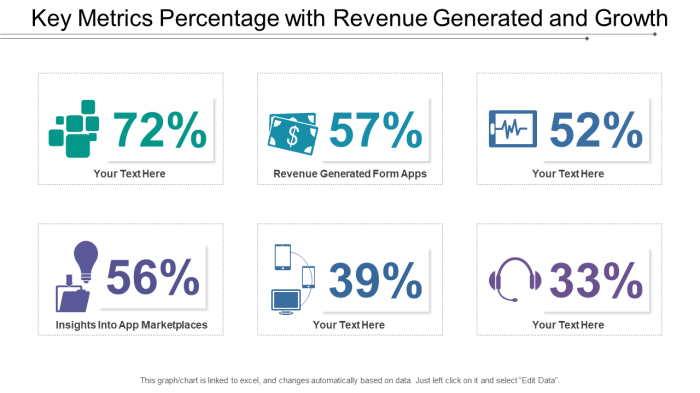
Understanding revenue growth is paramount for any business aiming for sustainable success. This exploration delves into the key metrics, strategies, and analyses crucial for not only tracking revenue increases but also for strategically planning future growth. We’ll examine various approaches, from organic expansion to inorganic acquisitions, and explore how external factors influence these critical metrics.
From defining revenue growth and identifying key performance indicators (KPIs) to analyzing trends and forecasting future performance, we will cover a comprehensive framework for understanding and optimizing your business’s revenue trajectory. This involves navigating both internal operational efficiencies and external market dynamics to achieve sustainable growth.
Defining Revenue Growth
Revenue growth represents the increase in a company’s revenue over a specific period. It’s a fundamental indicator of a business’s health and success, reflecting its ability to generate sales and expand its market reach. Sustained revenue growth is crucial for profitability, attracting investors, and ensuring long-term viability. Understanding the drivers and types of revenue growth is vital for effective business strategy.Revenue growth can be achieved through various means, broadly categorized as organic or inorganic.
Each approach presents unique challenges and opportunities, influencing the overall trajectory of a company’s financial performance. Analyzing these different growth paths helps businesses make informed decisions about resource allocation and strategic planning.
Organic Revenue Growth
Organic revenue growth stems from internal efforts, focusing on increasing sales within the existing business model. This might involve expanding into new markets within the same industry, developing new products or services to attract more customers, or enhancing marketing strategies to boost sales of existing offerings. For example, a coffee shop might achieve organic growth by introducing new seasonal drinks, improving customer service to increase loyalty, or expanding its operating hours to cater to a wider customer base.
The key is to leverage the company’s core competencies and resources to drive expansion.
Inorganic Revenue Growth
In contrast, inorganic revenue growth involves external strategies, such as mergers, acquisitions, or strategic partnerships. This approach offers a faster path to expansion than organic growth but often requires significant capital investment and carries higher risk. Acquiring a competitor, for instance, can instantly increase market share and revenue, but integrating the acquired company can be complex and challenging.
A software company might achieve inorganic growth by acquiring a smaller firm specializing in complementary technology, thereby broadening its product portfolio and reaching a new customer segment.
Factors Influencing Revenue Growth
Numerous internal and external factors can significantly impact a company’s revenue growth. A comprehensive understanding of these factors is essential for developing effective strategies to enhance revenue generation.Internal factors include the quality of products or services, pricing strategies, marketing and sales effectiveness, operational efficiency, and the overall management competency. For example, a company with superior product quality and effective marketing will likely experience higher revenue growth compared to a competitor with inferior products and weak marketing.External factors include macroeconomic conditions (e.g., economic growth, inflation, interest rates), competitive landscape (e.g., market share, competitor actions), technological advancements, regulatory changes, and geopolitical events.
For instance, a recession might negatively impact consumer spending, reducing revenue growth across many industries. Conversely, a technological breakthrough could create new market opportunities, boosting revenue for companies that can effectively adapt.
Key Metrics for Measuring Revenue Growth
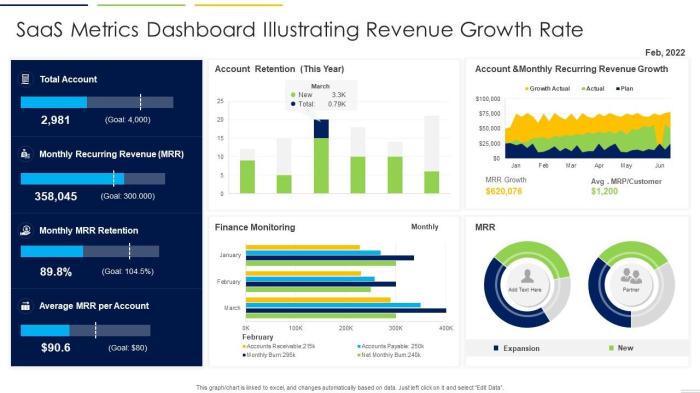
Understanding how your revenue is growing is crucial for business success. Tracking the right metrics provides valuable insights into your company’s performance, allowing for data-driven decision-making and strategic adjustments. This section will delve into five essential metrics for monitoring revenue growth, outlining their calculation, interpretation, and relative usefulness in different business contexts.
Essential Revenue Growth Metrics
Several key metrics provide a comprehensive view of revenue growth. Analyzing these metrics in conjunction offers a more nuanced understanding than relying on a single indicator. The following table details five crucial metrics, their formulas, interpretations, and illustrative examples.
| Metric Name | Formula | Interpretation | Example |
|---|---|---|---|
| Year-over-Year (YoY) Growth | [(Current Year Revenue - Previous Year Revenue) / Previous Year Revenue] - 100 |
Percentage change in revenue from one year to the next. Indicates the overall growth trend. | If revenue was $1 million last year and $1.2 million this year, YoY growth is [(1.2 – 1) / 1] – 100 = 20%. |
| Month-over-Month (MoM) Growth | [(Current Month Revenue - Previous Month Revenue) / Previous Month Revenue] - 100 |
Percentage change in revenue from one month to the next. Highlights short-term growth patterns and seasonality. | If revenue was $100,000 in June and $110,000 in July, MoM growth is [(110,000 – 100,000) / 100,000] – 100 = 10%. |
| Customer Lifetime Value (CLTV) | Average Purchase Value
|
Predicts the total revenue generated by a single customer throughout their relationship with the business. Crucial for customer retention strategies. | If the average purchase is $50, customers purchase 4 times a year, and the average customer relationship lasts 5 years, CLTV is $50
|
| Average Revenue Per User (ARPU) | Total Revenue / Total Number of Users |
Average revenue generated per user. Useful for understanding revenue per customer and identifying areas for improvement in monetization. | With $1 million in revenue and 10,000 users, ARPU is $1,000,000 / 10,000 = $100. |
| Revenue Growth Rate | (Current Revenue - Previous Revenue) / Previous Revenue |
Shows the rate at which revenue is increasing over a specific period. Can be calculated for any time period (YoY, MoM, Quarterly). | If revenue increased from $500,000 to $600,000, the revenue growth rate is ($600,000 – $500,000) / $500,000 = 0.2 or 20%. |
Comparing Revenue Growth Metrics Across Business Contexts
The usefulness of different revenue growth metrics varies significantly depending on the business context. For example, a subscription-based SaaS company might prioritize CLTV and ARPU to understand customer value and optimize pricing strategies. A retail business, on the other hand, may focus more on MoM and YoY growth to track seasonal fluctuations and overall sales trends. A startup might prioritize revenue growth rate to demonstrate rapid expansion to investors.
Limitations of Single Metric Reliance
Relying solely on a single revenue growth metric can be misleading. For instance, a high YoY growth rate might mask declining MoM growth, indicating potential underlying issues. A high ARPU might be offset by low customer acquisition, resulting in overall slow revenue growth. A comprehensive analysis requires considering multiple metrics simultaneously to gain a holistic understanding of revenue performance and identify areas for improvement.
Using a combination of metrics provides a more robust and reliable assessment of revenue growth than any single metric alone.
Analyzing Revenue Growth Trends
Understanding revenue growth trends is crucial for strategic business decision-making. Analyzing these trends allows businesses to identify periods of strong performance, pinpoint potential weaknesses, and proactively adjust strategies to optimize future growth. By examining historical data and identifying recurring patterns, companies can gain valuable insights into the effectiveness of their current operations and make data-driven adjustments for sustained success.Analyzing revenue growth data often reveals common patterns.
Many businesses experience periods of rapid growth followed by plateaus or even declines. This can be influenced by various factors, including seasonal fluctuations, economic cycles, the introduction of new products or services, changes in marketing strategies, and competitive pressures. Some companies may exhibit consistent, steady growth, while others experience more erratic patterns. Recognizing these variations is essential for developing accurate forecasts and setting realistic goals.
Revenue Growth Curve Visualization
A typical revenue growth curve can be visually represented as a line graph. The x-axis represents time (e.g., months or years), and the y-axis represents revenue. Initially, the curve might show slow, gradual growth, representing the early stages of a business or the introduction of a new product. This is followed by a period of accelerated growth, often characterized by a steeper upward slope.
This phase indicates the successful market penetration of the product or service. Eventually, the curve might flatten out, indicating a mature market or saturation. Key inflection points to highlight on the graph include the point of inflection where the growth rate changes (from accelerating to decelerating), the peak revenue point, and any points representing significant shifts in growth rate due to external factors or internal strategic changes.
For example, a sharp upward spike could indicate a successful marketing campaign, while a sudden dip might signal a temporary economic downturn or a competitor’s market entry. The visual representation should clearly illustrate these key phases and turning points, offering a concise overview of the company’s revenue performance over time.
Identifying Areas for Improvement
Analyzing revenue growth trends allows businesses to pinpoint areas needing improvement. For instance, a sustained period of slow growth might indicate a need for new product development, improved marketing strategies, or expansion into new markets. A significant drop in revenue could signal problems with product quality, customer service, or pricing. Conversely, a period of rapid growth might suggest the need for increased investment in infrastructure, personnel, or supply chain management to handle the increased demand.
By comparing the actual revenue growth to projected or target growth, businesses can identify gaps and develop strategies to close them. For example, if the actual revenue is consistently below projections, a thorough review of marketing effectiveness, sales processes, and product pricing might be necessary. A detailed analysis should include comparing revenue growth across different product lines, customer segments, and geographical regions to pinpoint specific areas requiring attention.
Revenue Growth Strategies and Tactics
Understanding and implementing effective revenue growth strategies is crucial for sustained business success. This section explores various approaches companies utilize to accelerate their revenue streams, examining both successful examples and the comparative advantages of different methodologies. We will also detail a step-by-step plan for implementing a chosen strategy.
Companies employ a variety of strategies to boost revenue, each with its own strengths and weaknesses depending on the market, product, and overall business goals. Choosing the right approach requires careful analysis of internal capabilities and external market dynamics.
Examples of Successful Revenue Growth Strategies
Several successful companies have demonstrated the effectiveness of various revenue growth strategies. These examples highlight the diverse approaches available and their potential impact on revenue.
- Netflix: Netflix initially focused on market penetration by aggressively expanding its DVD-by-mail service. Later, they transitioned to product expansion with their streaming service, adding original content and international markets to further fuel revenue growth. This dual strategy leveraged existing infrastructure and expanded into new market segments.
- Amazon: Amazon’s success stems from a multi-pronged approach. Market expansion into new geographical regions and product categories (e.g., AWS, grocery) has been crucial. Simultaneously, market penetration strategies like Prime membership and targeted advertising have increased customer loyalty and spending per customer.
- Apple: Apple excels at product expansion and premium pricing. By constantly innovating and releasing new products (iPhones, iPads, Apple Watches), and maintaining a strong brand image, they command higher prices and foster a loyal customer base willing to pay a premium.
Comparison of Revenue Growth Approaches
Different strategies for accelerating revenue growth offer unique advantages and disadvantages. A comparative analysis helps businesses select the most suitable approach for their specific circumstances.
| Approach | Description | Advantages | Disadvantages |
|---|---|---|---|
| Market Penetration | Increasing market share within existing markets with existing products. | Lower risk, leverages existing infrastructure, builds brand loyalty. | Limited growth potential if market is saturated, intense competition. |
| Product Expansion | Developing new products or services for existing markets. | Increased revenue streams, diversification, caters to evolving customer needs. | Higher risk, requires significant R&D investment, potential cannibalization of existing products. |
| Market Development | Expanding into new markets with existing products. | Significant growth potential, access to new customer segments. | Higher risk, requires adaptation to new market conditions, cultural understanding, and potentially significant marketing investment. |
Step-by-Step Plan for Implementing a Market Penetration Strategy
A well-defined plan is essential for successful implementation of any revenue growth strategy. This Artikels a structured approach for market penetration.
- Market Analysis: Conduct thorough research to identify your target customer segments within your existing market. Analyze their needs, preferences, and purchasing behaviors.
- Competitive Analysis: Assess your competitors’ strengths, weaknesses, pricing strategies, and market share. Identify opportunities to differentiate your offerings.
- Pricing Strategy: Develop a competitive pricing strategy that balances profitability with market appeal. Consider offering discounts, promotions, or loyalty programs to attract new customers.
- Marketing and Sales: Implement targeted marketing campaigns to reach your identified customer segments. Optimize your sales processes to effectively convert leads into customers.
- Customer Relationship Management (CRM): Implement a CRM system to track customer interactions, manage leads, and improve customer retention. This fosters long-term relationships and repeat business.
- Performance Monitoring: Regularly monitor key metrics such as market share, customer acquisition cost, and revenue growth to assess the effectiveness of your strategy and make necessary adjustments.
Forecasting Revenue Growth
Accurately forecasting revenue growth is crucial for effective business planning and resource allocation. A well-crafted forecast allows businesses to make informed decisions about investments, hiring, and overall strategic direction. Understanding various forecasting methods and their limitations is key to developing a robust and reliable prediction.Forecasting revenue growth involves using historical data and market insights to project future revenue.
Several quantitative methods exist, each with its strengths and weaknesses, depending on the data available and the complexity of the business environment. Choosing the right method is vital for generating accurate and actionable forecasts.
Time Series Analysis
Time series analysis uses past revenue data to identify patterns and trends, extrapolating these patterns to predict future revenue. This method is particularly useful when historical data is readily available and shows a clear trend. Simple methods like moving averages can smooth out short-term fluctuations, while more sophisticated techniques like ARIMA models can capture complex patterns and seasonality.
For example, a company with consistently increasing year-over-year revenue might use a simple linear regression to project future growth. However, if the revenue shows seasonal peaks and troughs, a more complex model accounting for seasonality would be necessary.
Regression Analysis
Regression analysis explores the relationship between revenue and other relevant variables, such as marketing spend, customer acquisition cost, or economic indicators. By identifying statistically significant relationships, regression models can predict revenue based on changes in these predictor variables. For instance, a company might find a strong positive correlation between its advertising budget and revenue. A regression model could then be used to predict revenue based on projected advertising expenditures.
Multiple regression allows for the incorporation of several predictor variables, providing a more comprehensive and nuanced forecast.
Interpreting Revenue Growth Forecasts and Their Implications
Revenue growth forecasts provide a roadmap for future business operations. A positive forecast suggests opportunities for expansion and investment, while a negative forecast might signal the need for cost-cutting measures or strategic adjustments. The forecast’s confidence interval, which reflects the uncertainty inherent in the prediction, should be carefully considered. A wide confidence interval indicates a higher degree of uncertainty, highlighting the need for contingency planning.
For example, a forecast predicting 10% growth with a confidence interval of ±5% indicates a range of 5% to 15% growth. This informs resource allocation and risk management strategies.
Refining Revenue Growth Forecasts
Improving the accuracy of revenue growth forecasts requires a continuous process of refinement and validation. Regularly reviewing and updating the forecast based on new data and changing market conditions is essential. Incorporating qualitative factors, such as market trends and competitive analysis, alongside quantitative data can significantly enhance the forecast’s accuracy. Sensitivity analysis, which examines the impact of changes in key assumptions on the forecast, helps identify potential risks and uncertainties.
For example, a company might run scenarios exploring the impact of a potential economic downturn on its revenue projection. This allows for proactive planning and mitigation strategies. Furthermore, comparing the forecast to actual results and analyzing the discrepancies can reveal areas for improvement in the forecasting methodology.
Revenue Growth and Profitability
Revenue growth and profitability are intrinsically linked, yet they don’t always move in perfect harmony. While increasing revenue is crucial for business success, it’s the profitability of that growth that ultimately determines long-term sustainability and value creation. Understanding this nuanced relationship is vital for effective strategic decision-making.Rapid revenue growth, while seemingly positive, can mask underlying inefficiencies and lead to decreased profitability if not managed carefully.
Conversely, prioritizing profitability too heavily might stifle growth potential and limit market share. The optimal path lies in finding a balance that maximizes both revenue expansion and profit margins.
Analyzing Profitability of Revenue Growth Initiatives
Analyzing the profitability of revenue growth initiatives requires a multifaceted approach. It’s not enough to simply look at the top-line revenue increase; a thorough assessment must consider the incremental costs associated with achieving that growth. This involves scrutinizing expenses directly tied to the initiative, such as marketing and sales costs, research and development, and operational expenses related to increased production or service delivery.
A key metric to consider is the incremental profit margin—the difference between the incremental revenue generated by the initiative and the incremental costs incurred. For instance, launching a new product line might generate significant revenue, but if the marketing campaign and production costs significantly outweigh the profit generated from sales, the initiative might not be profitable despite the revenue increase.
A detailed cost-benefit analysis is crucial to determine the true profitability of any growth strategy.
Potential Trade-offs Between Revenue Growth and Profitability
Balancing revenue growth and profitability often necessitates making trade-offs. For example, a company might choose to temporarily lower prices to gain market share and drive rapid revenue growth. This strategy, while boosting revenue, might reduce profit margins in the short term. Conversely, a company focused on high profit margins might choose to limit its market expansion, prioritizing profitability over aggressive growth.
Another example could involve investing heavily in R&D to develop innovative products, which can be costly upfront but potentially lead to higher revenue and profit margins in the long run. Companies must carefully weigh the short-term sacrifices against the long-term benefits when deciding how to balance these two crucial aspects of business performance. A well-defined strategic plan that accounts for these trade-offs and sets clear goals for both revenue and profit is essential for sustainable success.
Revenue Growth Case Studies
Understanding how companies achieve significant revenue growth provides valuable insights for strategic planning. Examining successful case studies allows us to identify common strategies and adapt them to diverse market conditions. The following examples illustrate different approaches to revenue growth, highlighting the factors contributing to their success.
Examples of Companies with Significant Revenue Growth
Several factors contribute to substantial revenue growth. These factors often intersect and reinforce each other, creating a synergistic effect. The following case studies illustrate this complexity.
| Company Name | Industry | Key Revenue Growth Strategies | Results |
|---|---|---|---|
| Netflix | Streaming Entertainment |
|
Experienced consistent double-digit revenue growth for years, expanding its subscriber base globally. |
| Amazon | E-commerce, Cloud Computing |
|
Became one of the world’s largest companies through rapid revenue growth across multiple business units. |
| Apple | Consumer Electronics |
|
Maintained consistent revenue growth through a combination of innovative products and a loyal customer base. |
| Microsoft | Software, Cloud Computing |
|
Demonstrated significant revenue growth driven by its cloud computing business and successful diversification. |
Ultimately, mastering revenue growth metrics isn’t just about tracking numbers; it’s about gaining a holistic understanding of your business’s performance within a dynamic market. By effectively analyzing key indicators, implementing strategic initiatives, and adapting to changing conditions, businesses can cultivate a sustainable path towards long-term profitability and success. The journey requires consistent monitoring, strategic adaptation, and a commitment to continuous improvement.
Helpful Answers
What is the difference between organic and inorganic revenue growth?
Organic growth stems from internal efforts like increased sales or new product launches. Inorganic growth involves external strategies such as mergers, acquisitions, or strategic partnerships.
How can I improve the accuracy of my revenue growth forecasts?
Refine forecasts by incorporating more granular data, utilizing multiple forecasting methods, regularly reviewing and adjusting based on actual performance, and factoring in potential market disruptions.
What are some common pitfalls to avoid when analyzing revenue growth?
Avoid relying solely on a single metric, neglecting qualitative factors, ignoring external market influences, and failing to account for seasonality or cyclical patterns in your data.
How do I determine which revenue growth strategies are best suited for my business?
Consider your industry, competitive landscape, resources, and long-term goals. A SWOT analysis can help identify strengths, weaknesses, opportunities, and threats to guide your strategy selection.