Understanding year-over-year revenue growth is crucial for any business aiming for sustainable success. It’s not just about the numbers; it’s about deciphering the story they tell – a narrative woven from internal strategies, market forces, and the ever-shifting economic landscape. This guide delves into the intricacies of calculating, analyzing, and strategically leveraging year-over-year revenue growth to achieve ambitious goals and navigate challenges effectively.
We will explore the key factors influencing this growth, both internal (like product development and marketing) and external (such as economic trends and competition). We’ll examine methods for analyzing trends, comparing growth across industries, and forecasting future performance. Finally, we’ll connect revenue growth to other vital metrics, offering a holistic view of business health and providing actionable strategies for improvement.
Factors Influencing Year-over-Year Revenue Growth
Understanding the drivers of year-over-year (YoY) revenue growth is crucial for businesses aiming for sustainable success. This involves analyzing both internal strategies and external market forces that contribute to, or hinder, revenue expansion. A holistic approach, considering the interplay between these factors, is essential for effective planning and decision-making.
Internal Factors Influencing Year-over-Year Revenue Growth
Internal factors are those directly controlled by the company. Strategic choices regarding product development, marketing, and operational efficiency significantly impact revenue growth. Effective management of these areas can lead to substantial increases in revenue.
Examples of Internal Factors and Their Impact
Effective product development, including innovation and improvements to existing products, is a key driver of revenue growth. For example, Apple’s continuous innovation with its iPhone line, incorporating new features and designs, has consistently fueled substantial YoY revenue increases. Conversely, a failure to innovate or adapt to changing consumer preferences can lead to declining sales and decreased revenue. Strong marketing campaigns, effectively targeting the right customer segments, are also critical.
A well-executed marketing strategy can increase brand awareness, drive sales, and boost overall revenue. Consider the impact of Netflix’s targeted marketing campaigns, which have expanded their subscriber base and consequently, their revenue. Poorly executed campaigns, however, can waste resources and yield minimal returns. Finally, operational efficiency plays a crucial role. Streamlining processes, reducing costs, and improving supply chain management can directly impact profitability and contribute to revenue growth.
Companies like Amazon, known for their efficient logistics and operations, have leveraged this to achieve significant YoY revenue growth.
External Factors Influencing Year-over-Year Revenue Growth
External factors are those outside the company’s direct control, but which significantly influence its performance. These include macroeconomic conditions, competitive pressures, and regulatory changes. Understanding and adapting to these factors is essential for sustained growth.
Examples of External Factors and Their Impact
Economic conditions, such as recession or expansion, have a profound impact on consumer spending and business investment. During economic downturns, businesses often experience reduced revenue due to decreased consumer demand. Conversely, periods of economic growth usually translate to increased consumer spending and business investment, leading to higher revenue. Competition also plays a significant role. Intense competition can pressure pricing, reducing profit margins and potentially hindering revenue growth.
Conversely, a less competitive market can allow companies to command higher prices and increase revenue. Finally, regulatory changes, such as new environmental regulations or tax laws, can impact business operations and profitability. For example, new environmental regulations might increase operational costs, potentially reducing profit margins and affecting revenue growth.
Interplay Between Internal and External Factors
Internal and external factors are interconnected and influence each other. For example, a company’s innovative product (internal factor) might be more successful in a growing economy (external factor). Conversely, a strong marketing campaign (internal factor) might be less effective during an economic recession (external factor). Effective management involves understanding this interplay and adapting strategies accordingly.
Impact of Internal and External Factors on Year-over-Year Revenue Growth
| Factor | Type (Internal/External) | Positive Impact | Negative Impact |
|---|---|---|---|
| Product Innovation | Internal | Increased sales, market share, and higher prices | High R&D costs, potential market failure |
| Marketing Campaigns | Internal | Increased brand awareness, customer acquisition, and sales | Wasted resources, ineffective targeting, negative brand perception |
| Operational Efficiency | Internal | Reduced costs, increased profitability, and higher margins | High initial investment, potential for employee resistance |
| Economic Conditions | External | Increased consumer spending, higher demand | Reduced consumer spending, decreased demand |
| Competition | External | Market opportunities, innovation driven by competition | Price wars, reduced market share, lower profit margins |
| Regulatory Changes | External | New market opportunities, increased compliance | Increased costs, operational challenges, reduced profitability |
Analyzing Revenue Growth Trends
Understanding year-over-year revenue growth trends is crucial for informed business decision-making. Analyzing these trends allows companies to identify periods of strong performance, pinpoint potential weaknesses, and proactively adjust strategies to optimize future growth. This analysis moves beyond simply observing year-to-year changes and delves into the underlying patterns and drivers of revenue growth.Analyzing year-over-year revenue growth involves several methods to uncover meaningful insights from multiple years of data.
These methods help businesses understand not only the magnitude of growth but also its consistency and underlying trends. This understanding is key to developing effective long-term strategies.
Methods for Analyzing Year-over-Year Revenue Growth
Several approaches can be employed to analyze year-over-year revenue growth trends over multiple years. These methods range from simple calculations to more sophisticated statistical techniques. The chosen method depends on the complexity of the data and the desired level of analysis.
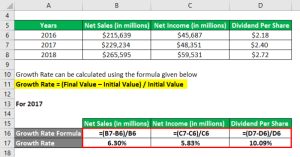
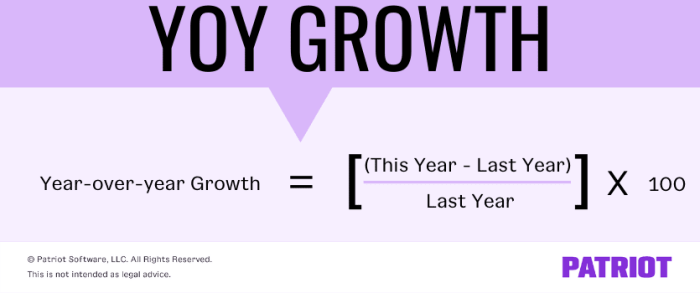
- Calculating Growth Rates: The simplest method involves calculating the percentage change in revenue from one year to the next. This provides a clear picture of the growth rate for each year. For example, if revenue was $1 million in Year 1 and $1.1 million in Year 2, the growth rate is 10%. Repeating this calculation for multiple years reveals the growth pattern.
- Moving Averages: To smooth out short-term fluctuations and identify underlying trends, moving averages can be used. A three-year moving average, for example, averages the revenue growth rates of three consecutive years. This helps to reduce the impact of outliers and highlight the overall trend.
- Regression Analysis: For a more sophisticated analysis, regression analysis can be used to model the relationship between revenue and time. This allows for forecasting future revenue and identifying potential turning points. A simple linear regression could model revenue as a function of time, while more complex models could incorporate other factors influencing revenue.
Significance of Identifying Trends and Patterns
Identifying trends and patterns in revenue growth data is critical for several reasons. Understanding these patterns enables proactive planning and informed decision-making.Consistent, predictable growth suggests a healthy and sustainable business model. Conversely, erratic or declining growth may indicate underlying problems requiring attention. Identifying cyclical patterns can help businesses anticipate seasonal variations and adjust their strategies accordingly. For instance, a company might increase marketing efforts during periods of historically lower sales.
Understanding these trends allows businesses to optimize resource allocation, manage cash flow effectively, and make informed investment decisions.
Visualizing Year-over-Year Revenue Growth with Line Charts
Line charts provide a clear and effective way to visualize year-over-year revenue growth trends. The horizontal axis represents time (years), and the vertical axis represents revenue. Each data point represents the revenue for a specific year, and these points are connected by lines to show the trend.To generate such a chart, one would first collect the revenue data for each year.
Then, the years would be plotted along the horizontal axis, and the corresponding revenue values would be plotted on the vertical axis. Each year’s revenue is represented by a point. A line is then drawn connecting these points, showing the year-over-year growth trend. For instance, if Year 1 revenue was $500,000, Year 2 was $600,000, Year 3 was $750,000, and Year 4 was $800,000, the line chart would show an upward trend, with the line sloping upward from left to right.
The slope of the line visually represents the rate of growth. Steeper slopes indicate faster growth, while flatter slopes indicate slower growth. A downward sloping line would indicate a decline in revenue. Additional features like annotations can be added to highlight significant events or milestones that correlate with changes in revenue.
Comparing Revenue Growth Across Industries
Understanding year-over-year revenue growth requires a comparative analysis across various industries. Different sectors experience varying growth rates due to a multitude of factors, including economic cycles, technological advancements, and regulatory changes. Examining these differences provides valuable insights into industry dynamics and potential investment opportunities.This section compares year-over-year revenue growth rates across several key industries, highlighting the variations and underlying reasons.
The analysis focuses on identifying industry-specific factors that significantly impact revenue growth trajectories.
Technology Industry Revenue Growth
The technology sector is often characterized by rapid and fluctuating growth. Several factors contribute to this dynamism. For example, the constant innovation in software, hardware, and services leads to periods of explosive growth followed by consolidation and slower expansion. Furthermore, the technology industry is heavily influenced by consumer trends and adoption rates of new technologies. A successful new product launch can dramatically boost revenue, while a failure can negatively impact growth.
Conversely, established technology companies with mature product lines may experience more moderate, consistent growth. The high degree of competition and rapid obsolescence also play a role. Consider the contrasting growth trajectories of companies like Apple (consistent growth through a loyal customer base and diversified product portfolio) versus smaller startups (potentially rapid growth followed by either market dominance or failure).
Healthcare Industry Revenue Growth
The healthcare industry demonstrates a different growth pattern compared to technology. Revenue growth in healthcare is often more stable and predictable, driven by factors such as an aging population, increasing healthcare needs, and government regulations. However, growth can be influenced by factors such as healthcare reforms, changes in insurance coverage, and the pricing of pharmaceuticals and medical devices.
Government spending on healthcare, for example, can significantly influence revenue growth for hospitals and related healthcare providers. The pharmaceutical industry, within healthcare, experiences growth driven by new drug approvals and pricing strategies, while medical device companies experience growth based on technological advancements and adoption rates of new devices.
Retail Industry Revenue Growth
The retail industry’s year-over-year revenue growth is highly susceptible to economic conditions and consumer spending habits. Economic downturns often lead to reduced consumer spending, negatively impacting revenue growth. Conversely, periods of economic expansion often result in increased retail sales. The rise of e-commerce has also significantly impacted the retail landscape, with some brick-and-mortar stores experiencing declining revenue while online retailers see significant growth.
Competition from both online and physical retailers also plays a substantial role. The success of a particular retail segment depends on its ability to adapt to changing consumer preferences and technological advancements. For instance, companies focusing on sustainable or ethical practices might experience faster growth than those lagging in these areas.
Impact of Industry-Specific Factors
Several industry-specific factors significantly influence revenue growth. These factors include:
- Technological advancements: Industries heavily reliant on technology, such as the technology sector itself, often experience rapid growth spurred by innovation.
- Economic cycles: Industries like retail are strongly correlated with economic performance, experiencing higher growth during expansions and lower growth during recessions.
- Government regulations: Healthcare and pharmaceuticals are heavily regulated, impacting pricing, product development, and overall growth.
- Consumer trends: Consumer preferences significantly influence growth across many sectors, including retail and technology.
- Competitive landscape: High competition can lead to price wars and reduced profit margins, impacting revenue growth in many industries.
Revenue Growth Strategies
Sustainable revenue growth is crucial for long-term business success. It requires a strategic approach that combines effective marketing, efficient operations, and a deep understanding of the market and customer needs. This section explores various strategies businesses can implement to achieve and maintain consistent revenue growth.
Several key strategies contribute to sustainable revenue growth. These strategies aren’t mutually exclusive; rather, they often work best in concert, creating a synergistic effect that amplifies their individual impact. A holistic approach, tailored to the specific business and market, is essential for optimal results.
Effective Revenue Growth Strategies
Implementing a range of strategies is vital for achieving sustainable revenue growth. The specific mix will depend on the industry, business model, and competitive landscape. However, some common and highly effective strategies consistently deliver positive results.
- Product Diversification: Expanding the product or service offerings to cater to a wider customer base or address unmet needs in the market. For example, a coffee shop could diversify by offering pastries, sandwiches, and catering services.
- Market Penetration: Increasing market share within existing markets. This could involve targeted marketing campaigns, improved customer service, or loyalty programs to encourage repeat business and attract new customers from within the existing target market. A clothing retailer might achieve this through a robust social media presence and influencer marketing.
- Market Development: Expanding into new markets, either geographically or by targeting new customer segments. A local bakery could expand to a neighboring town or start offering online ordering and delivery to reach a broader customer base.
- Strategic Partnerships: Collaborating with other businesses to leverage their resources and reach new customers. A software company might partner with a consulting firm to offer bundled solutions to their clients.
- Pricing Optimization: Analyzing pricing strategies to maximize revenue without alienating customers. This could involve implementing value-based pricing, dynamic pricing, or tiered pricing models.
- Customer Retention Strategies: Focusing on retaining existing customers through exceptional service, loyalty programs, and personalized communication. A subscription service might offer exclusive content or early access to new features to retain subscribers.
Developing a Revenue Growth Plan
A well-defined plan is essential for translating revenue growth strategies into tangible results. This plan should be specific, measurable, achievable, relevant, and time-bound (SMART).
- Conduct a thorough market analysis: Identify target markets, understand customer needs, and analyze the competitive landscape.
- Set realistic revenue growth targets: Establish achievable goals based on historical data, market trends, and resource availability. For example, aiming for a 10% year-over-year growth might be more realistic than a 50% increase.
- Develop specific strategies: Choose strategies aligned with the market analysis and overall business goals. This could include a combination of the strategies Artikeld above.
- Allocate resources effectively: Ensure sufficient budget, personnel, and technology are allocated to support the chosen strategies.
- Implement and monitor: Track key performance indicators (KPIs) regularly to measure progress and make necessary adjustments to the plan.
- Regularly review and adapt: The market is constantly evolving, so the plan needs to be flexible and adaptable to changing circumstances.
Importance of Setting Realistic Revenue Growth Targets
Setting realistic targets is crucial for maintaining motivation and ensuring the plan’s success. Unrealistic targets can lead to disappointment, demotivation, and ultimately, failure. Realistic targets, however, provide a clear direction, encourage consistent effort, and allow for accurate performance measurement.
For instance, a small startup aiming for a 100% year-over-year revenue growth in its first year might be overly ambitious unless it has a very unique product or service and a robust marketing strategy. A more realistic target might be a 20-30% increase, allowing for growth while accounting for potential challenges.
The Relationship Between Revenue Growth and Other Key Metrics
Understanding year-over-year revenue growth is crucial, but viewing it in isolation provides an incomplete picture of a company’s overall health. A comprehensive assessment requires analyzing its relationship with other key financial metrics, revealing a more nuanced understanding of business performance and sustainability. This section explores the interconnectedness of revenue growth with profitability and other vital indicators.Revenue growth and profitability, while intrinsically linked, are not always perfectly correlated.
While increased revenue suggests a growing market presence and potential for profit, it doesn’t automatically translate to higher profitability. Profitability, often measured by profit margins (gross profit margin, operating profit margin, net profit margin), reflects the efficiency of converting revenue into actual profit. High revenue growth accompanied by shrinking profit margins might indicate issues such as rising costs or pricing pressures, necessitating a deeper investigation into operational efficiency.
Conversely, modest revenue growth with improving profit margins could signify a focus on cost control and strategic pricing, resulting in a healthier bottom line.
Revenue Growth and Profitability
Profit margins provide crucial context to revenue growth. A company might experience impressive year-over-year revenue increases, but if its profit margins are declining, the overall financial health might be deteriorating. For example, a company might aggressively pursue market share by lowering prices, resulting in higher sales volume but lower profit per unit. Conversely, a company focusing on high-margin products or services might experience slower revenue growth but a healthier profit margin, indicating sustainable profitability.
Analyzing both metrics together paints a clearer picture than examining revenue growth alone. The relationship can be visualized using a simple chart showing both revenue growth and profit margin trends over time. A diverging trend (high revenue growth with falling profit margin) would warrant further investigation.
Revenue Growth and Other Financial Metrics
Revenue growth’s impact extends beyond profitability. It influences other critical financial metrics, including earnings per share (EPS) and return on investment (ROI). EPS, a measure of profitability per share, is directly affected by revenue growth and net income. Higher revenue, if translated into higher profits, generally leads to increased EPS, benefiting shareholders. Similarly, ROI, measuring the return on invested capital, is influenced by both revenue growth and efficiency.
Strong revenue growth coupled with efficient operations leads to a higher ROI, indicating effective capital allocation. A company with consistently high revenue growth but low ROI might be overspending or facing inefficiencies in its operations.
Using Multiple Metrics for Business Performance Assessment
Integrating year-over-year revenue growth with other key metrics allows for a holistic business performance evaluation. Analyzing trends in revenue growth alongside profit margins, EPS, and ROI reveals a comprehensive picture. For instance, a scenario where revenue growth is slowing but profit margins are increasing suggests a strategy focused on efficiency and maximizing profitability from existing operations. Conversely, a situation where revenue growth is strong but EPS and ROI are stagnant might highlight issues with operational efficiency or capital allocation.
Using these metrics in conjunction provides a much more complete and nuanced view than relying solely on revenue growth figures. A balanced scorecard approach, which incorporates financial, customer, internal process, and learning and growth perspectives, can effectively integrate these diverse metrics to gauge overall business performance.
Revenue Growth Forecasting
Accurately forecasting future revenue growth is crucial for strategic planning and resource allocation. Businesses rely on these predictions to make informed decisions about investments, hiring, and overall operational strategies. Effective forecasting methods consider both historical data and anticipated market trends, ultimately providing a roadmap for future success.Predicting future revenue requires a blend of quantitative analysis and qualitative judgment.
While historical data provides a foundation, external factors and internal changes must also be incorporated for a comprehensive forecast. Different methods exist, each with its strengths and weaknesses, depending on the complexity of the business and the availability of data.
Methods for Forecasting Future Revenue Growth
Several established methods can be employed to forecast future revenue growth. The selection of the most appropriate method depends on factors such as the availability of historical data, the complexity of the business, and the desired level of accuracy. A combination of methods is often used to provide a more robust and reliable forecast.
- Time Series Analysis: This method uses historical revenue data to identify patterns and trends. Techniques like moving averages, exponential smoothing, and ARIMA models are used to extrapolate these patterns into the future. For example, a company with consistently increasing year-over-year revenue might use exponential smoothing to predict future growth, adjusting for seasonal variations.
- Regression Analysis: This statistical method examines the relationship between revenue and other relevant variables, such as marketing spend, economic indicators, or competitor activity. A multiple linear regression model could, for example, predict revenue based on advertising expenditure and GDP growth. The resulting equation allows for revenue projection based on anticipated changes in these variables.
- Qualitative Forecasting: This approach relies on expert opinions and market research to predict future revenue. Techniques include surveys, focus groups, and Delphi methods, which involve gathering opinions from a panel of experts to arrive at a consensus forecast. For instance, a new product launch might leverage market research to estimate potential sales, feeding into the overall revenue forecast.
Examples of Different Forecasting Techniques
The application of forecasting techniques varies greatly depending on the industry and specific business context. Let’s consider a few examples illustrating the diverse approaches.
- Simple Moving Average: A company with relatively stable revenue might use a simple moving average of the past three years’ revenue to predict the next year’s revenue. This approach is straightforward but doesn’t account for trends or seasonality.
- Exponential Smoothing: A retail business experiencing fluctuating sales due to seasonal changes might employ exponential smoothing, giving more weight to recent data to better reflect current trends and account for seasonal variations.
- Causal Forecasting (Regression): A technology company launching a new software product might use regression analysis to correlate marketing spend with sales. By projecting future marketing investment, they can estimate potential revenue generated by the new product.
The Importance of Considering Uncertainty and Risk in Revenue Growth Forecasts
Revenue forecasts are inherently uncertain. Unforeseen events, such as economic downturns, changes in consumer behavior, or competitive pressures, can significantly impact actual revenue. Therefore, it is crucial to incorporate uncertainty and risk into the forecasting process.
It’s not enough to provide a single point estimate; a range of possible outcomes, along with associated probabilities, offers a more realistic and useful forecast.
This can be achieved through techniques like scenario planning, which involves developing multiple forecasts based on different assumptions about future conditions. Sensitivity analysis can also identify the variables that have the greatest impact on the forecast, allowing for more focused risk management strategies. For example, a company might develop optimistic, pessimistic, and most likely scenarios for revenue growth, each reflecting different levels of risk and uncertainty.
This allows for better preparation and adaptation to unexpected events.
Mastering the art of analyzing and strategically managing year-over-year revenue growth is not merely about achieving higher numbers; it’s about building a resilient and thriving business. By understanding the interplay of internal and external factors, leveraging effective strategies, and integrating revenue growth with other key performance indicators, businesses can confidently navigate the complexities of the market and achieve sustainable, long-term success.
This comprehensive approach allows for informed decision-making, proactive adjustments, and ultimately, the realization of ambitious growth targets.
User Queries
What if my year-over-year revenue growth is negative?
A negative growth rate indicates a decline in revenue compared to the previous year. Analyze the contributing factors (market conditions, internal issues) to develop corrective strategies.
How can I improve my year-over-year revenue growth?
Strategies include improving marketing effectiveness, enhancing product offerings, optimizing operations, and exploring new market segments.
What is a healthy year-over-year revenue growth rate?
A “healthy” rate varies greatly by industry and company size. Benchmark against competitors and consider your industry’s average growth.
How often should I calculate year-over-year revenue growth?
Ideally, it should be calculated and reviewed regularly, at least quarterly or annually, to track progress and identify potential issues early on.