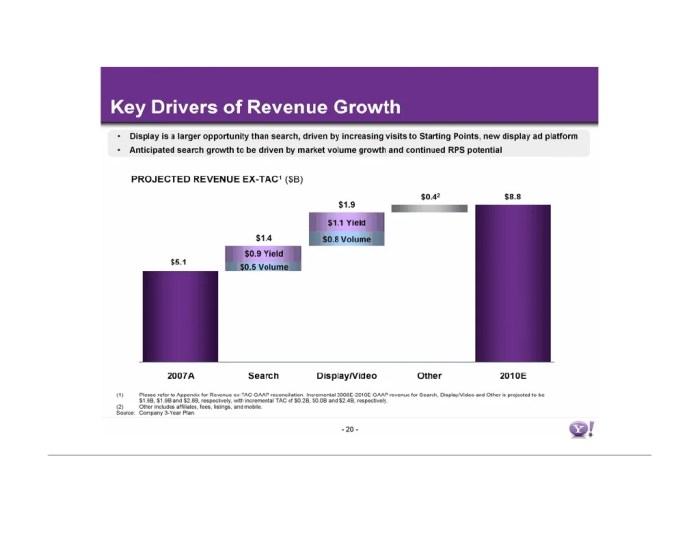
Understanding the drivers of revenue growth is crucial for any business aiming for sustainable expansion. This exploration delves into key strategies, from innovative market expansion and product development to optimized pricing and effective marketing initiatives. We’ll examine the interconnectedness of these elements and how a holistic approach can unlock significant revenue potential.
The journey to revenue growth isn’t a single path; rather, it’s a strategic blend of proactive measures and data-driven decisions. This analysis will provide a framework for understanding how to identify and leverage the most impactful strategies for your specific business context, considering both organic and inorganic growth opportunities.
Pricing Strategies and Optimization
Effective pricing is crucial for driving revenue growth. A well-defined pricing strategy, informed by market research and a clear understanding of customer value, can significantly impact profitability and market share. This section will explore different pricing models, the influence of price elasticity of demand, and best practices for market research in pricing decisions.
Three Pricing Models and Their Revenue Impact
Three distinct pricing models offer diverse approaches to revenue generation. Each model presents advantages and disadvantages depending on the specific market conditions, product characteristics, and business objectives.
- Value-Based Pricing: This model sets prices based on the perceived value customers place on the product or service. It focuses on the benefits and solutions offered rather than solely on production costs. For example, a premium skincare brand might price its products higher than competitors because it emphasizes the unique ingredients and results-oriented approach. This strategy can command higher margins but requires strong brand positioning and customer perception of value.
- Cost-Plus Pricing: This traditional method calculates the price by adding a fixed markup percentage to the total cost of production. It provides a straightforward approach to pricing, ensuring profitability based on a predetermined margin. However, it may not always reflect market demand or competitive pricing, potentially limiting revenue potential. For instance, a manufacturer of generic pharmaceuticals might use this method, adding a standard markup to their production and distribution costs.
- Competitive Pricing: This model sets prices based on the prices of competitors. It can be advantageous for entering a new market or maintaining market share. However, it can lead to price wars and reduced profitability if not carefully managed. Consider the airline industry; competitive pricing is often a key factor, leading to fluctuations in ticket prices depending on competitor offerings.
Price Elasticity of Demand and Revenue Generation
Price elasticity of demand measures the responsiveness of quantity demanded to changes in price. Understanding this elasticity is vital for optimizing revenue. High elasticity (elastic demand) means that a small price change leads to a significant change in demand. Low elasticity (inelastic demand) means that price changes have a minimal effect on demand.
| Price Point | Quantity Demanded | Total Revenue | Elasticity (Example) |
|---|---|---|---|
| $10 | 1000 | $10,000 | – |
| $12 | 800 | $9,600 | Elastic (-1.67) |
| $8 | 1200 | $9,600 | Elastic (-1.67) |
| $15 | 600 | $9000 | Elastic (-2.5) |
| $5 | 1500 | $7500 | Elastic (-2.0) |
A decrease in price can increase total revenue if demand is elastic, while an increase in price might increase total revenue if demand is inelastic.
Best Practices for Market Research in Pricing Decisions
Thorough market research is essential for making informed pricing decisions. This research should go beyond simply observing competitor prices.
- Customer Segmentation: Identify different customer groups with varying price sensitivities and willingness to pay. This allows for tailored pricing strategies for each segment.
- Value Proposition Analysis: Clearly define the value proposition of the product or service and how it addresses customer needs. This forms the basis for value-based pricing.
- Competitive Analysis: Go beyond simple price comparisons; analyze competitor offerings, strengths, weaknesses, and target markets. Understand their pricing strategies and the factors influencing their pricing decisions.
- Price Sensitivity Testing: Conduct surveys or experiments to determine how changes in price affect demand. This provides empirical data to inform pricing decisions and optimize revenue.
- Cost Analysis: A thorough understanding of all costs associated with the product or service is crucial for calculating profitability at various price points.
Sales and Marketing Initiatives
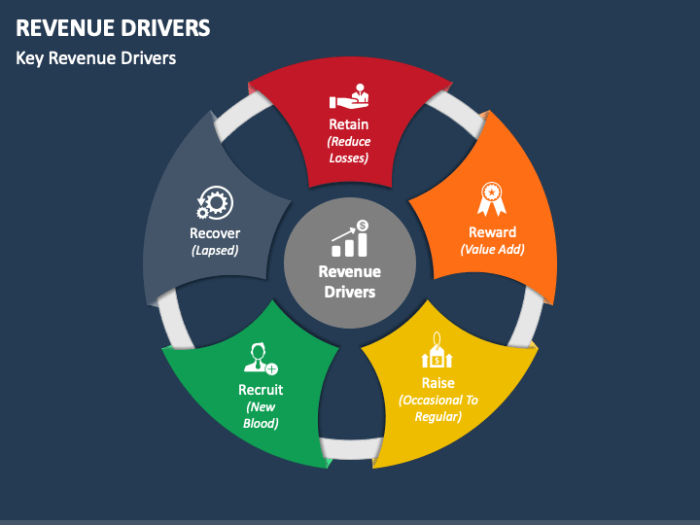
A robust sales and marketing plan is crucial for driving sustainable revenue growth. This plan Artikels strategies to attract new customers, increase sales, and ultimately boost the bottom line. It focuses on a multi-channel approach leveraging both traditional and digital marketing techniques, supported by clear performance indicators to measure success and inform future strategies.A comprehensive marketing plan requires a multifaceted approach encompassing various strategies and tactics, executed across a defined timeline.
This plan will detail specific actions and their expected impact on key performance indicators.
Marketing Plan: Strategies and Tactics
This section details the strategies and tactics for attracting new customers and increasing sales. The plan will be implemented over a twelve-month period, with quarterly reviews and adjustments as needed. The overarching goal is to increase brand awareness, generate leads, and convert those leads into paying customers.
- Phase 1 (Months 1-3): Brand Awareness and Lead Generation
-Focus on building brand awareness through social media marketing (targeted ads on platforms like Facebook and Instagram), search engine optimization () to improve organic search rankings, and content marketing (blog posts, articles, and infographics) to establish thought leadership. We will also implement email marketing campaigns to nurture leads and drive conversions. - Phase 2 (Months 4-6): Lead Nurturing and Conversion
– This phase focuses on converting leads into customers. We will utilize targeted advertising campaigns, personalized email sequences, and webinars to educate prospects and demonstrate the value proposition. Sales team training will be intensified to improve closing rates. - Phase 3 (Months 7-9): Customer Retention and Loyalty
-This phase aims to retain existing customers and build brand loyalty. We will implement customer loyalty programs, personalized communication, and ongoing support to foster long-term relationships. We’ll also analyze customer feedback to identify areas for improvement. - Phase 4 (Months 10-12): Expansion and Optimization
– This phase focuses on expanding our market reach and optimizing our marketing efforts based on the data collected in previous phases. We will explore new marketing channels and refine our strategies based on performance data. A full marketing audit will be conducted to identify areas for improvement.
Key Performance Indicators (KPIs)
Tracking key performance indicators is essential to evaluate the effectiveness of sales and marketing initiatives. Three key KPIs will be monitored to measure success: Customer Acquisition Cost (CAC), Customer Lifetime Value (CLTV), and Return on Investment (ROI).
- Customer Acquisition Cost (CAC): This metric measures the cost of acquiring a new customer. It will be calculated by dividing the total marketing and sales expenses by the number of new customers acquired. A lower CAC indicates greater efficiency in acquiring customers. We will aim to reduce CAC by 15% over the year.
- Customer Lifetime Value (CLTV): This metric predicts the total revenue generated by a customer over their relationship with the company. It will be calculated using a formula that considers factors such as average purchase value, purchase frequency, and customer lifespan. Increasing CLTV is crucial for long-term profitability. We will aim to increase CLTV by 10% over the year.
- Return on Investment (ROI): This metric measures the profitability of marketing and sales investments. It will be calculated by dividing the net profit generated by marketing and sales activities by the total investment. A higher ROI indicates a greater return on investment. We will aim for a 20% ROI on marketing and sales investments.
The Role of Digital Marketing
Digital marketing plays a vital role in driving revenue growth. Social media marketing and search engine optimization () are two key channels that will be leveraged.
Social Media Marketing: We will utilize platforms like Facebook, Instagram, and LinkedIn to reach target audiences with targeted advertising campaigns. Engaging content, interactive posts, and influencer collaborations will be used to build brand awareness and drive traffic to our website. We will closely monitor engagement metrics such as likes, shares, and comments to optimize our strategies.
Search Engine Optimization (): will be used to improve our website’s organic search ranking. This involves optimizing website content, meta descriptions, and backlinks to improve visibility in search engine results pages (SERPs). research and on-page optimization will be crucial for attracting organic traffic to our website. We will track rankings and organic traffic to measure the effectiveness of our efforts.
Operational Efficiency and Cost Reduction
Optimizing operational efficiency is crucial for boosting profitability and revenue growth. By streamlining processes, automating tasks, and improving supply chain management, businesses can significantly reduce costs and enhance customer satisfaction, ultimately leading to increased revenue. This section will explore three key areas ripe for improvement, illustrating potential cost savings with specific examples.Streamlining processes and automating tasks are vital for achieving operational efficiency.
Automating repetitive tasks frees up employees to focus on higher-value activities, improving productivity and reducing errors. This section details how these strategies contribute to revenue growth by reducing operational costs.
Inventory Management Optimization
Effective inventory management is paramount for minimizing storage costs, reducing waste from expired or obsolete goods, and ensuring timely fulfillment of customer orders. For example, a retail business currently using a first-in, first-out (FIFO) inventory system might experience significant improvements by implementing a just-in-time (JIT) inventory system. A JIT system minimizes storage space and reduces the risk of holding obsolete inventory.
Let’s assume the business currently holds $100,000 worth of excess inventory annually due to overstocking. Switching to a JIT system could reduce this by 75%, resulting in annual savings of $75,000. This freed capital can be reinvested in other areas to further boost revenue. Furthermore, reduced storage needs could lead to lower rent or warehouse costs.
Energy Consumption Reduction
Reducing energy consumption can significantly impact operational costs. Implementing energy-efficient technologies and practices, such as upgrading to LED lighting, optimizing HVAC systems, and improving insulation, can yield substantial savings. Consider a manufacturing plant currently spending $50,000 annually on electricity. By investing in energy-efficient equipment and implementing energy-saving practices, they could potentially reduce their energy consumption by 20%, saving $10,000 annually.
This cost saving directly increases profitability and allows for reinvestment in revenue-generating activities.
Supply Chain Optimization
Improving supply chain management is crucial for reducing costs and enhancing customer satisfaction. This involves optimizing logistics, improving supplier relationships, and implementing efficient warehousing and distribution systems. For instance, a company experiencing high shipping costs due to inefficient routing could implement route optimization software. This software analyzes delivery routes, identifies the most efficient paths, and reduces fuel consumption and delivery times.
Let’s assume the company currently spends $20,000 per month on shipping. Implementing route optimization software could potentially reduce these costs by 15%, saving $3,000 per month or $36,000 annually. Improved delivery times also contribute to higher customer satisfaction, leading to increased sales and repeat business. Moreover, stronger supplier relationships could lead to better pricing and more reliable delivery schedules.
Ultimately, driving revenue growth requires a multifaceted approach that integrates market understanding, product innovation, strategic pricing, effective marketing, and operational efficiency. By strategically aligning these elements and continuously monitoring key performance indicators, businesses can create a sustainable growth trajectory and achieve long-term financial success. The journey demands adaptability, a willingness to experiment, and a commitment to data-driven decision-making.
FAQ
What is the difference between organic and inorganic revenue growth?
Organic growth involves expanding revenue through internal efforts like improved marketing or new product development. Inorganic growth uses external strategies such as mergers and acquisitions.
How can I measure the effectiveness of my revenue growth strategies?
Key Performance Indicators (KPIs) like revenue growth rate, customer acquisition cost, and customer lifetime value provide quantifiable measures of success. Regularly tracking these metrics allows for data-driven adjustments.
What role does technology play in revenue growth?
Technology streamlines operations, enhances customer experience (e.g., through e-commerce), and enables data-driven decision-making, all contributing significantly to revenue growth.
How important is customer feedback in driving revenue growth?
Customer feedback is vital. It informs product development, identifies unmet needs, and helps refine marketing strategies, directly impacting customer satisfaction and ultimately, revenue.


